12 min read
 Weekly Recap
FOMC holds rates; Warsh’s hawkish dot plot signals potential rate hikes
The Federal Open Market Committee voted unanimously 12-0 to hold the federal funds rate at 3.50%-3.75% on Wednesday, June 17, in Kevin Warsh’s first meeting as Fed Chair. The decision was as expected — but the accompanying Summary of Economic Projections delivered a sharply hawkish shift, with the median dot for end-2026 moving to 3.8%, up from 3.4% in March and implying a 25-basis-point rate hike. Nine of 18 participants now project at least one hike before year-end. Warsh himself declined to submit a dot, indicating he viewed it as unhelpful in policy conduct.
Seventeen of 18 participants saw the risks to their inflation forecast as weighted to the upside, with no participant seeing downside risk — the most uniform hawkish tilt in years. The median 2026 PCE inflation forecast was lifted to 3.6%, a sharp upward revision from 2.7% in March, while 2026 real GDP growth was trimmed to 2.2% from 2.4%. The Fed statement was reduced to 130 words — down from 341 in April — with all easing-bias language stripped out at Warsh’s direction. Warsh also announced five task forces to review the inflation framework, productivity, data methodology, communications, and the balance sheet.
The hawkish shift drove Gold lower, with the metal closing Friday near $4,150 per ounce after reaching an intraweek low of $4,121. Gold recorded its third consecutive weekly decline, now nearly 25% below January’s all-time high above $5,500. CME FedWatch indicates traders are pricing in a 60-70% probability of a September rate hike. Goldman Sachs reduced its year-end Gold forecast to $4,900 from $5,400. The combination of a hawkish Fed and the US-Iran peace deal, which removed the safe-haven premium, has led to a sustained repositioning in precious metals.
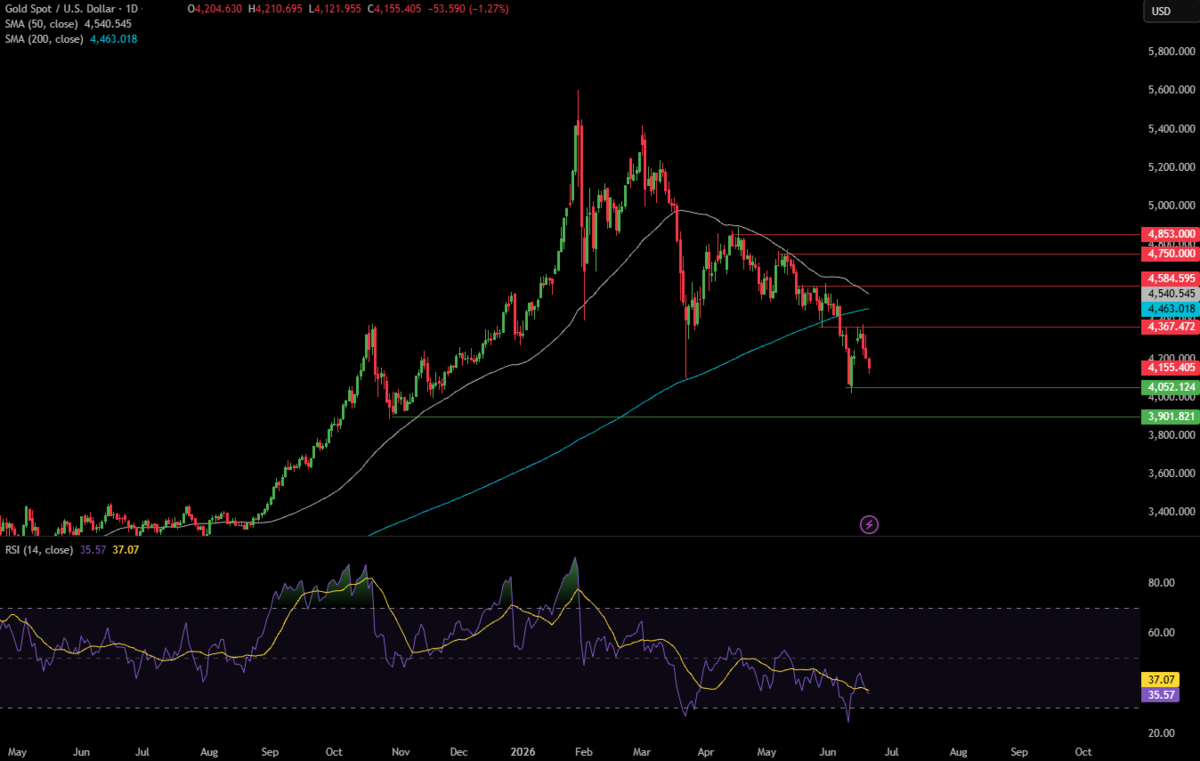
Thursday’s May Core PCE inflation release will test whether the dot plot’s hawkish outlook sets a minimum or maximum for policy. A reading at or above the Fed’s revised 3.6% year-end PCE target would likely push Gold toward $3,900, while a softer result and confident implementation of the Iran deal could support a recovery.
BoJ delivers +25bp hike to 1.00% — highest since 1995
The Bank of Japan increased its benchmark overnight call rate by 25 basis points to 1.00% on Tuesday, June 16, in a 7-1 vote. This is the highest policy rate since September 1995 and the first increase since December 2025. Board member Asada Toichiro dissented, citing greater downside risks to production and employment than to prices. The decision aimed to prevent the Iran conflict-driven energy shock from fueling broader domestic inflation.
This was the first regular BoJ policy meeting without Governor Kazuo Ueda, who was hospitalized with a hepatic cyst infection. Deputy Governor Ryozo Himino chaired the session and later told parliament that real interest rates remain “at extremely low levels” and that the central bank will continue to adjust rates as economic, price, and financial conditions change. Japan’s wholesale inflation reached 6.3% in May, the highest since March 2023.
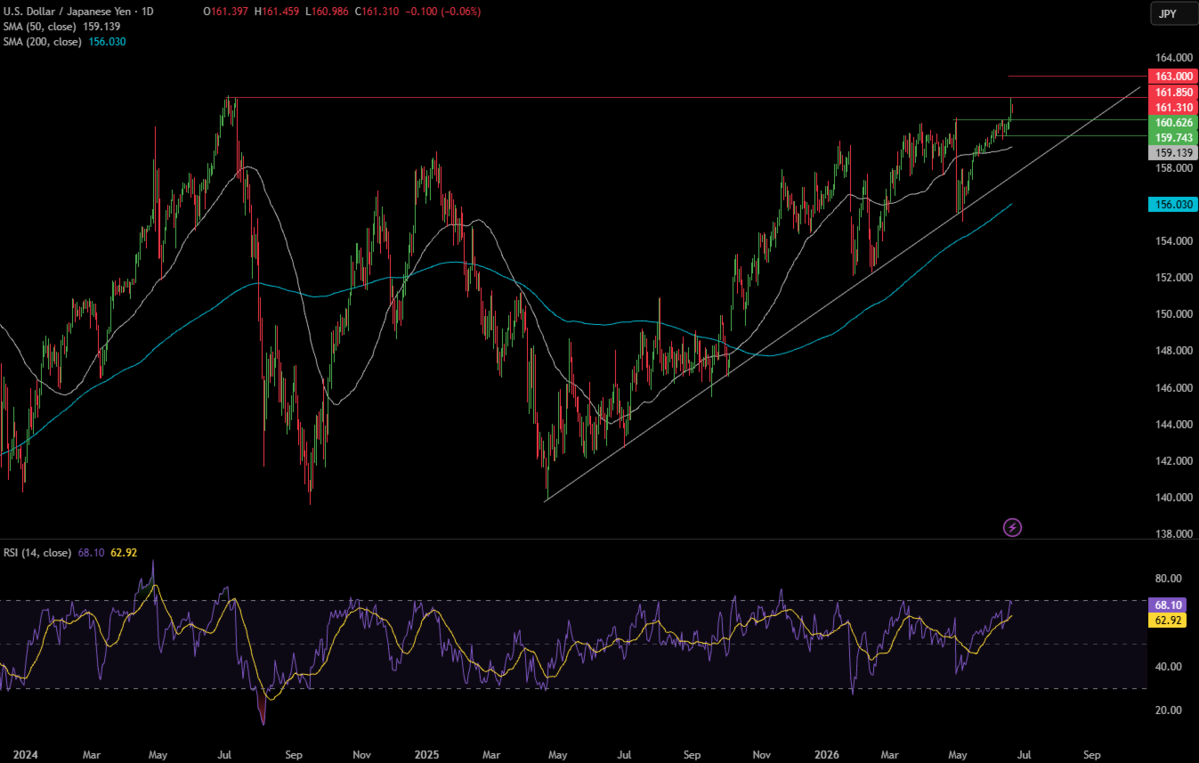
A strong US Core PCE reading and ongoing yen weakness could push USD/JPY towards 163, increasing speculation about intervention.
BoE holds rates at 3.75% in a 7-2 vote
The Bank of England’s Monetary Policy Committee voted 7-2 on Thursday, June 18, to maintain Bank Rate at 3.75% for the fourth consecutive meeting. Chief Economist Huw Pill and external member Megan Greene dissented in favor of an immediate 25-basis-point hike to 4.00%, citing concerns that second-round effects from the energy price shock could become embedded in UK inflation expectations.
The pound was initially supported by hawkish dissent and a post-FOMC dollar pullback, but later declined as the US dollar strengthened against other G10 currencies. Markets now expect approximately one BoE rate hike this year, down from up to four hikes anticipated at the start of the conflict.
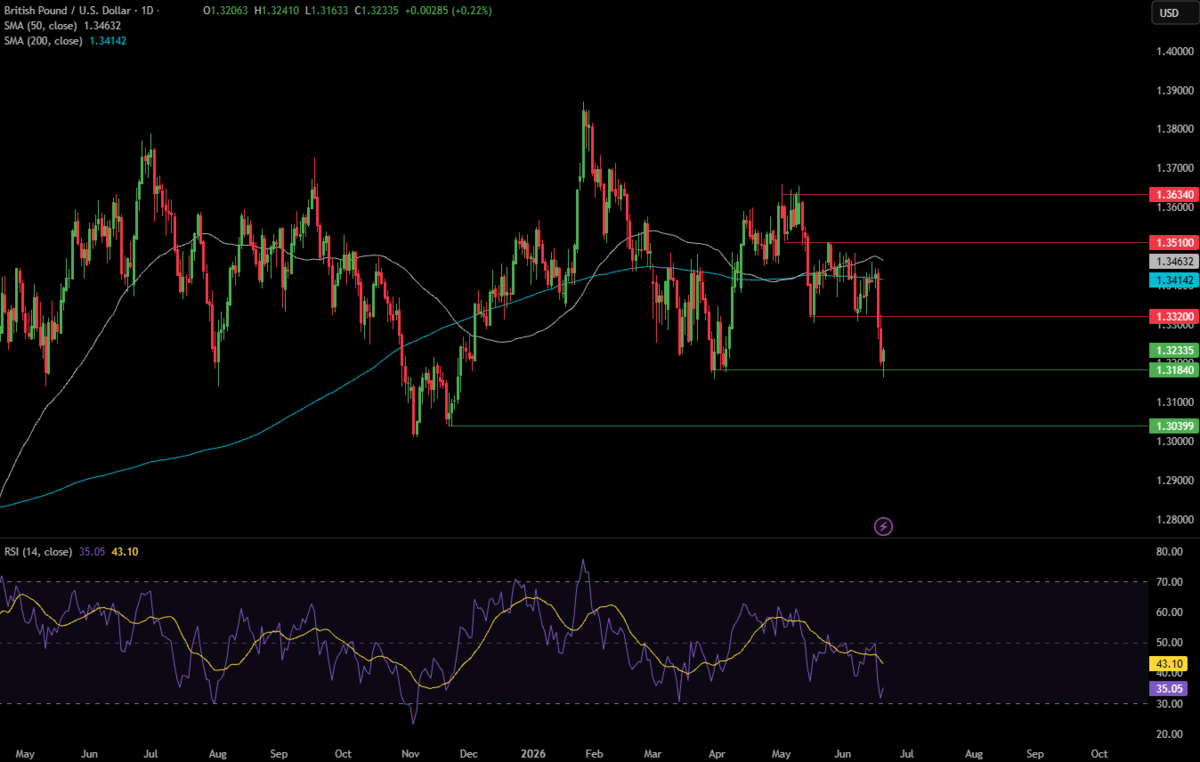
A strong US Core PCE reading could push GBP/USD toward 1.3040 amid prevailing dollar strength.
Indian markets: Sensex posts weekly gain despite IT sector-led decline on Friday
The Nifty 50 closed the week at 24,013.10 on Friday, June 19, down 154.90 points or 0.64% for the day but up 2.57% for the week, marking its strongest weekly performance since the peace deal narrative began. The Sensex ended at 76,802.90, down 607 points or 0.78% on Friday, but up 1.7% for the week. The Friday decline was driven by losses in the IT sector, with Infosys down 6.48%, TCS down 3.04%, and HCL Tech down 2.73% after Accenture lowered its revenue growth guidance, raising concerns about sector demand.
Apart from the decline in the IT sector, the week was supported by lower crude oil prices, optimism over a peace deal with Iran, and a stronger rupee. USD/INR fell to 94.32 by Friday, marking the rupee’s strongest level in over a month, as the deal announcement eased imported inflation pressures. Foreign institutional investors recorded net buying of ₹4,859 crore on Friday, partially offsetting earlier outflows during the week.
India’s trade deficit narrowed slightly to $28.21 billion in May, although petroleum imports rose to $22.7 billion from $14 billion in April, reflecting the ongoing impact of high crude prices during the conflict. With the US-Iran deal signed at the Versailles G7 dinner and the Strait of Hormuz reopening, India’s import bill is expected to improve through Q3, though near-term concerns over IT sector demand persist.
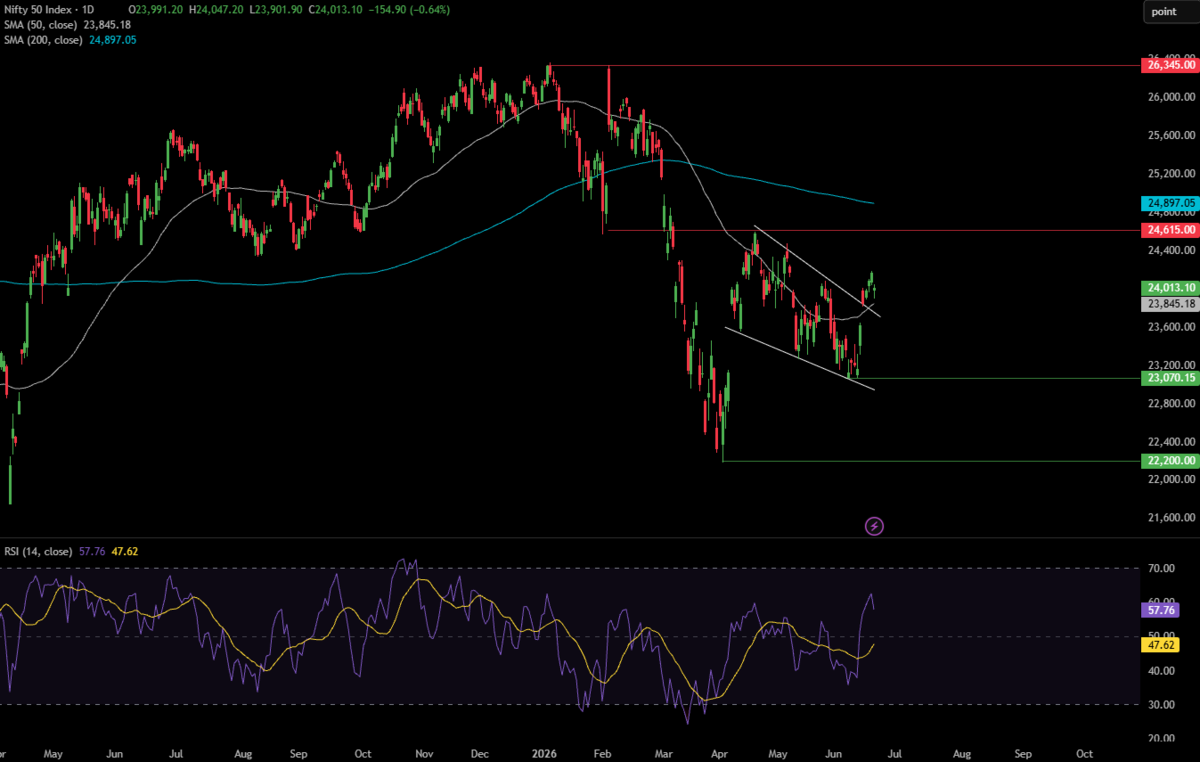
A strong US Core PCE reading and a hawkish Fed dot plot could push the Nifty lower toward 23,070 amid a stronger dollar and renewed foreign investor outflows. If the Iran deal proceeds as planned and PCE data is softer, the index could recover toward 24600, especially if concerns about the IT sector ease.
Pakistan markets: KSE-100 near record on peace mediator role
The KSE-100 closed at 178,923 on Friday, June 19, down 1.36% for the day but up 8.55% over the past month. The index is moving toward its all-time high of 189,556, set on January 23, reflecting Pakistan’s significant macroeconomic improvement and its increased prominence as the lead mediator in the US-Iran peace process.
The State Bank of Pakistan kept its policy rate unchanged at 11.50% on Monday, June 15, during the final FY26 MPC meeting. The decision weighed elevated CPI, which stood at 11.7% in May (the highest since June 2024), against easing global oil prices after the announcement of the peace deal. The MPC also noted the successful completion of the third IMF EFF review and projected foreign exchange reserves to reach $18 billion by the end of June 2026, up from $17.2 billion on June 5.
Prime Minister Shehbaz Sharif’s prominent role in announcing the US-Iran deal on June 14, alongside Qatar’s mediation, has significantly raised Pakistan’s diplomatic profile. The agreement reportedly includes an “immediate and permanent termination of military operations on all fronts, including in Lebanon,” with Pakistan, Qatar, Saudi Arabia, and Turkey recognized as mediators. The June economic survey reported FY26 GDP growth of 3.7%, up from 3.2% the previous year, and the FY27 budget targets 4.1% growth and 8.4% inflation.
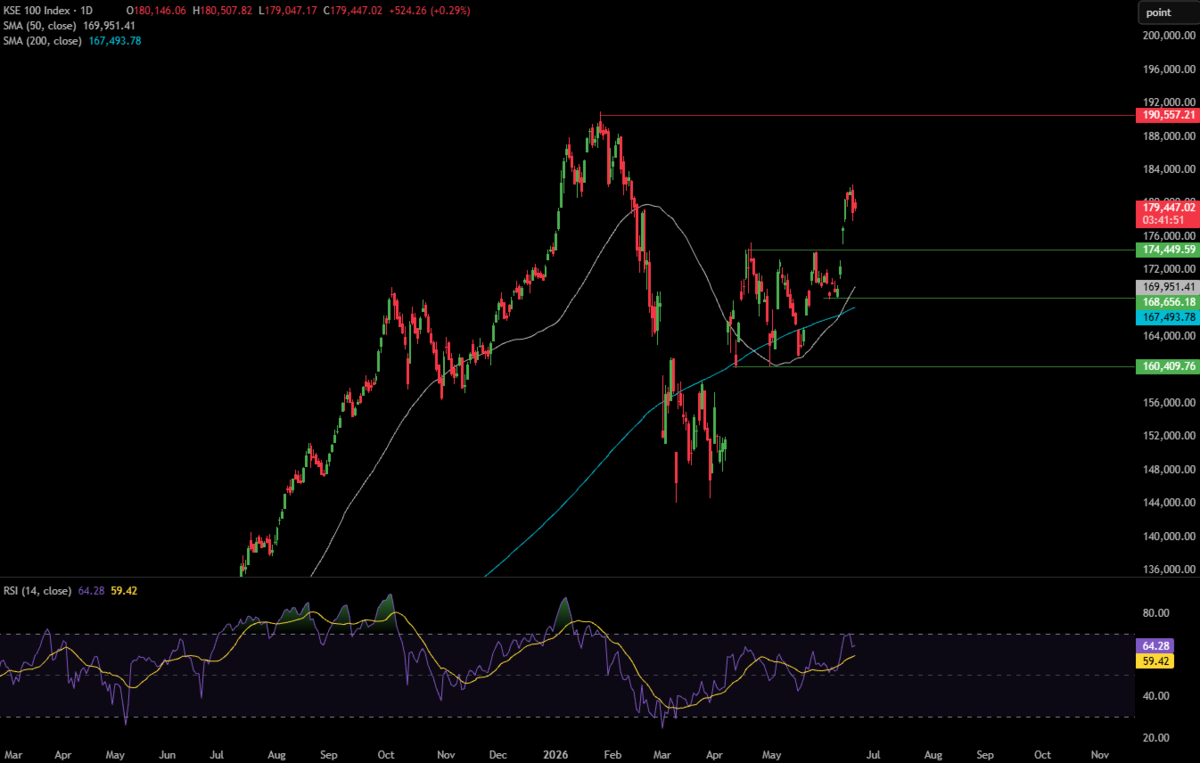
Continued implementation of the Iran deal and the reopening of the Strait of Hormuz would reduce Pakistan’s import bill and support the KSE-100’s return toward its January record. Conversely, a strong US Core PCE reading and renewed dollar strength could weaken the rupee and push the index down toward 174,300.
Week Ahead (US & Asia)
US Core PCE May — Thursday, 25 June, 12:30 UTC
The May Personal Income and Outlays report is the most significant data release of the week, scheduled for Thursday, June 25, at 08:30 ET (12:30 UTC) by the Bureau of Economic Analysis. This is the first major inflation indicator following Wednesday’s hawkish Fed dot plot and will influence expectations for a 2026 rate hike. Wells Fargo economists project headline PCE to rise 0.5% for the month, increasing the annual rate to 4.1% from April’s 3.8%. Core PCE, the Fed’s preferred inflation measure, is expected to increase 0.3% month-on-month and 3.4% year-on-year, up from 3.3% in April.
The Fed’s June Summary of Economic Projections raised the median 2026 PCE inflation forecast to 3.6% from 2.7% in March. A May reading at or above this revised target would support the hawkish dot plot and increase the likelihood of a September rate hike, currently priced at 60-70% by CME FedWatch. A softer result could weaken the hawkish narrative and trigger a relief rally in risk assets.
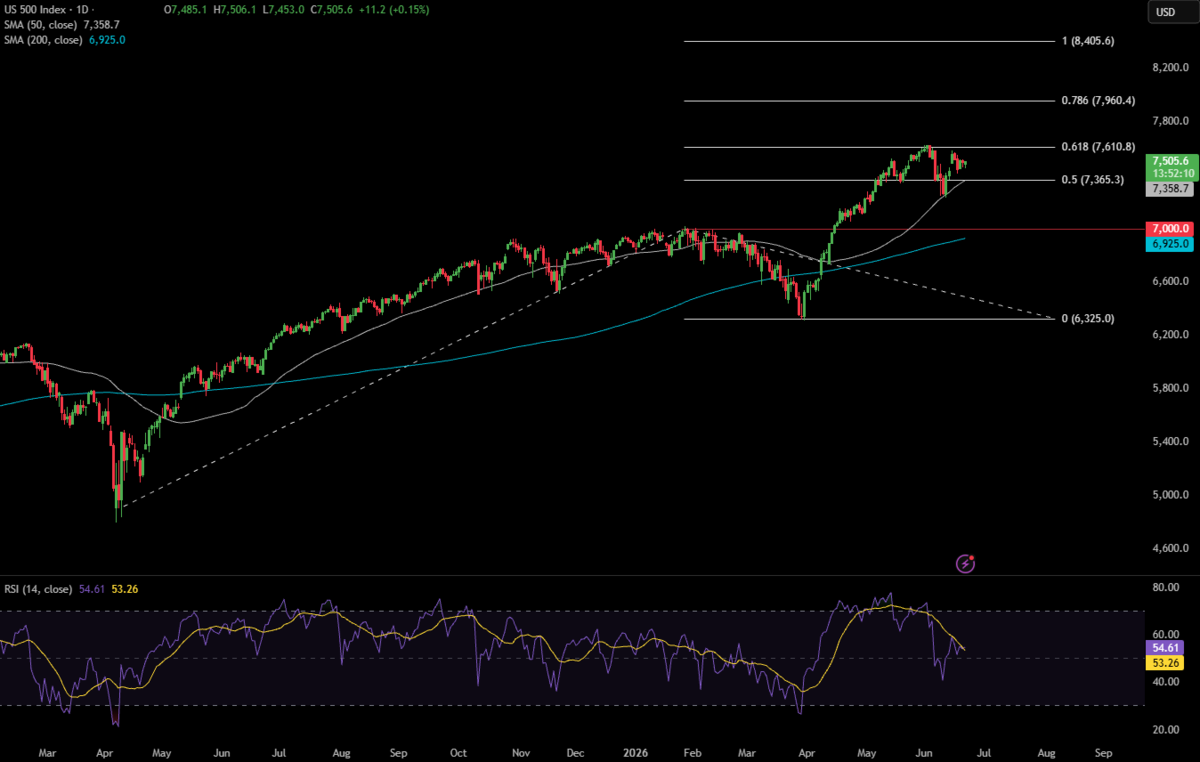
A strong Core PCE reading would likely push the S&P 500 down toward 7,360 by reinforcing expectations of prolonged higher rates. A softer regression in implementing the Iran deal could help the index reach new record highs above 7,600.
US Q1 GDP Third Estimate — Thursday, 25 June, 12:30 UTC
The Bureau of Economic Analysis will release the Q1 GDP Third Estimate at 08:30 ET (12:30 UTC) on Thursday, June 25, alongside the May PCE data. The initial estimate showed real GDP rising 2.0%, later revised down to 1.6% in the second estimate due to weaker investment and consumer spending, particularly in private nonfarm inventory investment and services consumption.
The third estimate is not expected to bring major surprises but will offer a final view of the Q1 economic context as the Iran conflict began to impact the economy. Corporate profits, state-level GDP, and state personal income data will also be released. The FOMC’s June SEP lowered the 2026 GDP growth forecast to 2.2% from 2.4% in March, indicating the committee expects the conflict’s effects to persist even after the peace deal.
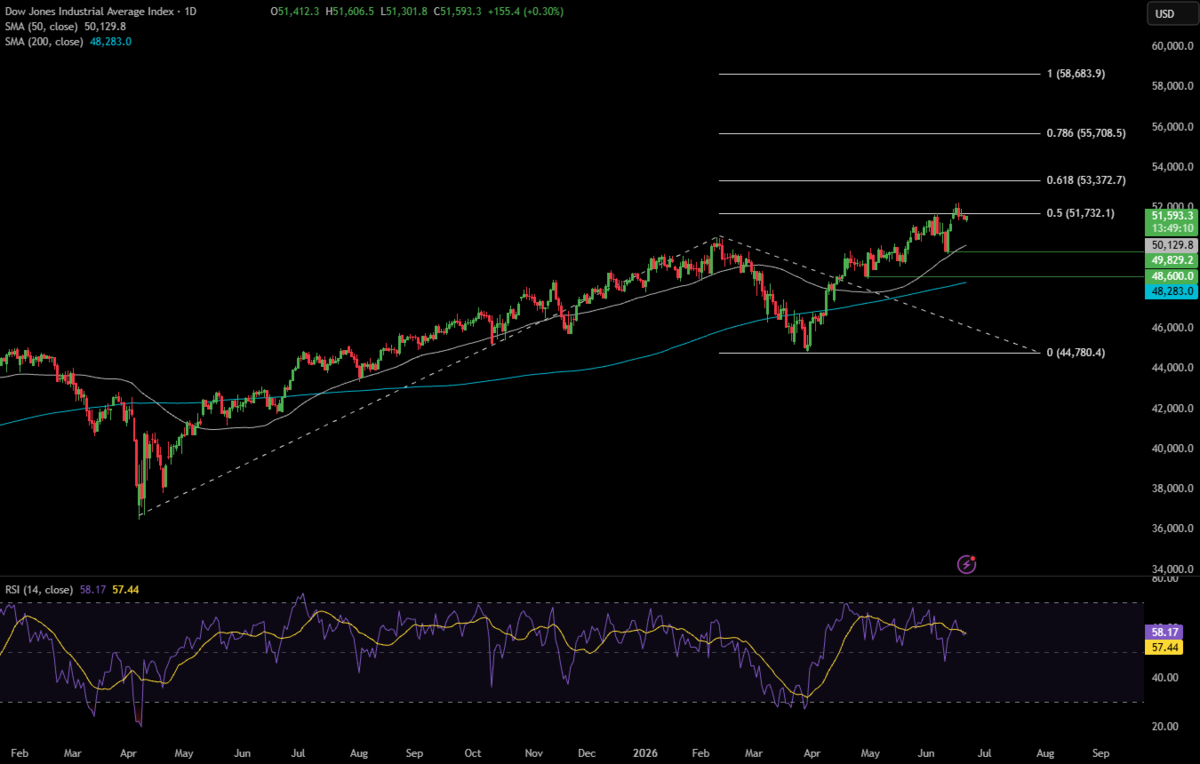
Confirmation of Q1 weakness, along with a strong PCE reading, would likely push the Dow Jones down toward 49,800 by reinforcing stagflation concerns. If GDP holds at 1.6% or improves slightly and PCE is softer, the Dow could move back toward record highs at 53,300.
Iran deal implementation & Hormuz reopening — All week
The week begins with the US-Iran peace framework partially signed, but implementation remains uncertain. President Trump signed a 60-day memorandum of understanding with Iranian President Pezeshkian at the Palace of Versailles after the G7 summit on Wednesday, June 17. However, the formal signing ceremony in Switzerland on Friday, June 19, was postponed after Vice President Vance canceled his trip to Bürgenstock. Switzerland’s foreign ministry confirmed the talks “would not proceed as planned.” On June 18, Pakistan, as the primary mediator, announced that the deal still requires Tehran to promptly reopen the Strait of Hormuz and for the American blockade of Iranian ports to end immediately.
UK Brent settled at $80.57 per barrel on Friday, up 0.9% for the day but down 5-8% for the week. The benchmark dropped below $80 mid-week to $78.96 on Tuesday, the first time since March, following reports that the US would allow Iran to resume oil sales immediately under the deal. Vice President Vance confirmed that Iranians had not fired on any ships in the Strait for two consecutive nights, suggesting implementation is progressing despite the delayed signing.
On Friday, June 19, Trump announced a renewed Israel-Hezbollah ceasefire and stated that there would be no tolls for passage through the Strait of Hormuz during or after the 60-day ceasefire period. The IEA estimates the Strait accounted for about 20% of seaborne oil trade before the conflict. Goldman Sachs and JPMorgan note that successful implementation would structurally improve global supply, but warn that damaged Gulf infrastructure could keep capacity below pre-war levels through Q3.
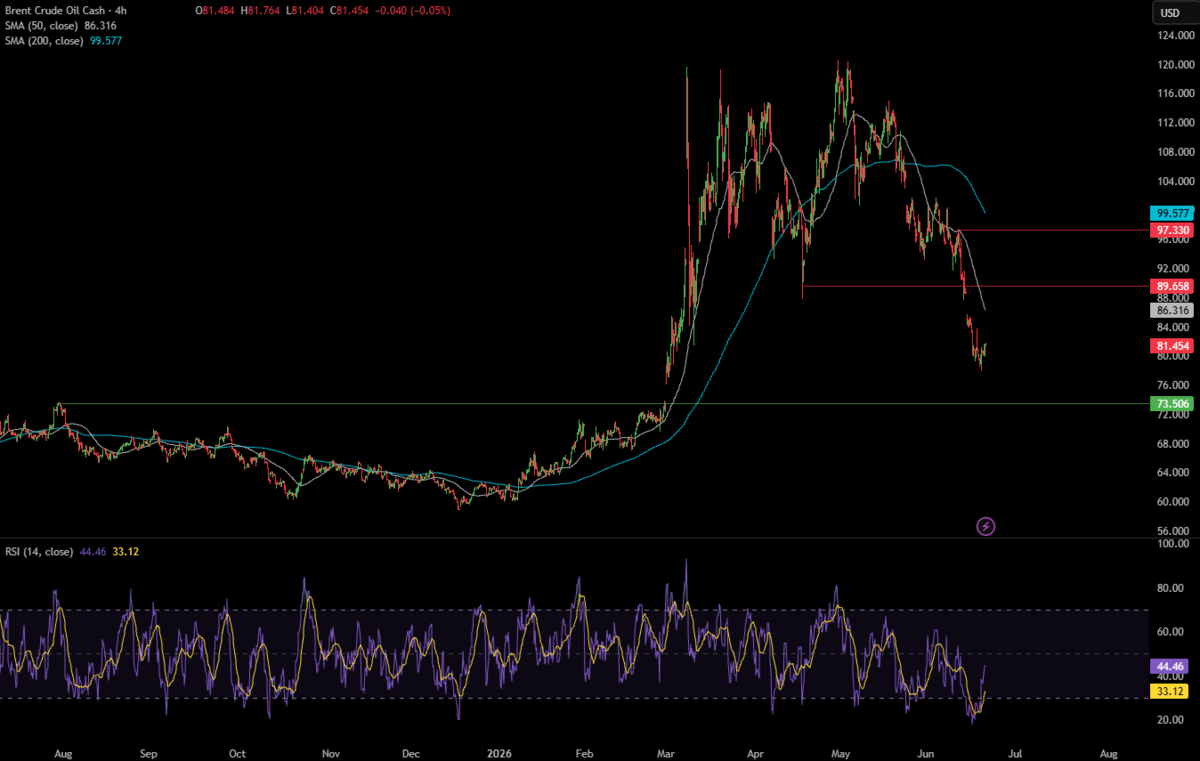
If implementation proceeds smoothly this week, with confirmed ship traffic, no further escalation, and progress on Iran’s enriched uranium status, Brent could fall toward $73.50. Any setbacks in technical talks or new tanker incidents could reverse this trend and push the benchmark above $90.
Bottom line
The week ahead focuses on Iran deal implementation and Thursday’s key test of the hawkish Fed dot plot. A strong Core PCE reading and confirmed Q1 GDP weakness would reinforce stagflation concerns, pressuring both the S&P 500 and the Dow Jones, and supporting September rate hike expectations following Warsh’s first SEP.
Trading involves risk.
Author



 Risk Disclaimer
The content provided here is for informational purposes only. It is not intended as personal investment advice and does not constitute a solicitation or invitation to engage in any financial transactions, investments, or related activities. Past performance is not a reliable indicator of future results.
The financial products offered by the Company are complex and come with a high risk of losing money rapidly due to leverage. These products may not be suitable for all investors. Before engaging, you should consider whether you understand how these leveraged products work and whether you can afford the high risk of losing your money.
The Company does not accept clients from the Restricted Jurisdictions as indicated in our website/ T&C. Some services or products may not be available in your jurisdiction.
The applicable legal entity and its respective products and services depend on the client’s country of residence and the entity with which the client has established a contractual relationship during registration.