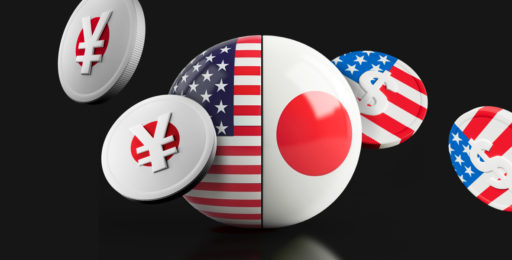

USD/JPY's near-term path now hinges on the Bank of Japan's willingness to keep tightening, with Bank of America and CBA producing sharply divergent forecasts. A weakening dollar, tied to the return of the "sell America" trade and a Wall Street Journal report on Trump-Warsh contacts, adds another layer of uncertainty.
The Bank of Japan needs to keep tightening if it wants to hold current USD/JPY levels, and forecasters disagree on whether it will. Bank of America expects USDJPY to plummet to 149 by the end of the year, arguing the BoJ will be forced to accelerate policy tightening to defend the pair's current range. CBA takes the opposite view, forecasting a rally to 165 by Q2 2027 as the BoJ raises its overnight rate only twice while the Fed tightens three or four times starting in December.
Dollar retreats as 'sell America' trade returns
The dollar continued its retreat as the "sell America" trade, popular during the trade wars, made a comeback against a backdrop of easing geopolitical risks. Distrust in US policy has grown following coordinated currency intervention. A Wall Street Journal report claims Donald Trump is in regular contact with Kevin Warsh, fueling speculation. If the incoming Fed chair turns out to answer to the White House, the dollar could face a rough ride.
Separately, Oman and Iran are reportedly close to a deal to reopen the Strait of Hormuz without charging a fee, though this would most likely require the US to lift sanctions. That would raise oil supply and lower prices, easing accelerating inflation risk. As a result, the likelihood of further Fed tightening would diminish, letting other currencies gain against the dollar.
Carry trades could pressure the yen
A resurgence in carry trades could weigh on the yen. Due to coordinated currency intervention, the Bloomberg EM FX Carry Risk Premia Index fell by approximately 1%, far less than the 4% slump the index saw in 2024 during Japan's forex interventions. Carry traders had prepared for that scenario by diversifying their portfolios, and they are now gradually returning to selling the yen as a funding currency, anticipating a slow normalization of BoJ policy.
The fate of USD/JPY still rests with the two central banks. US employment data for July will move all dollar pairs next: a strong labor market would support the greenback, while a cooling one would help the yen.
Source: ActionForex
Trading involves risk.





 Risk Disclaimer