10 min read
 Weekly recap
Iran deal implementation & Brent collapse
Brent crude fell approximately 8.5% over the week, closing at $81.45 on Friday and reversing nearly all gains since the conflict began on 28 February. This decline followed the Iran-US peace deal announced the previous Sunday and the reopening of the Strait of Hormuz, which unwound the supply-shock premium.
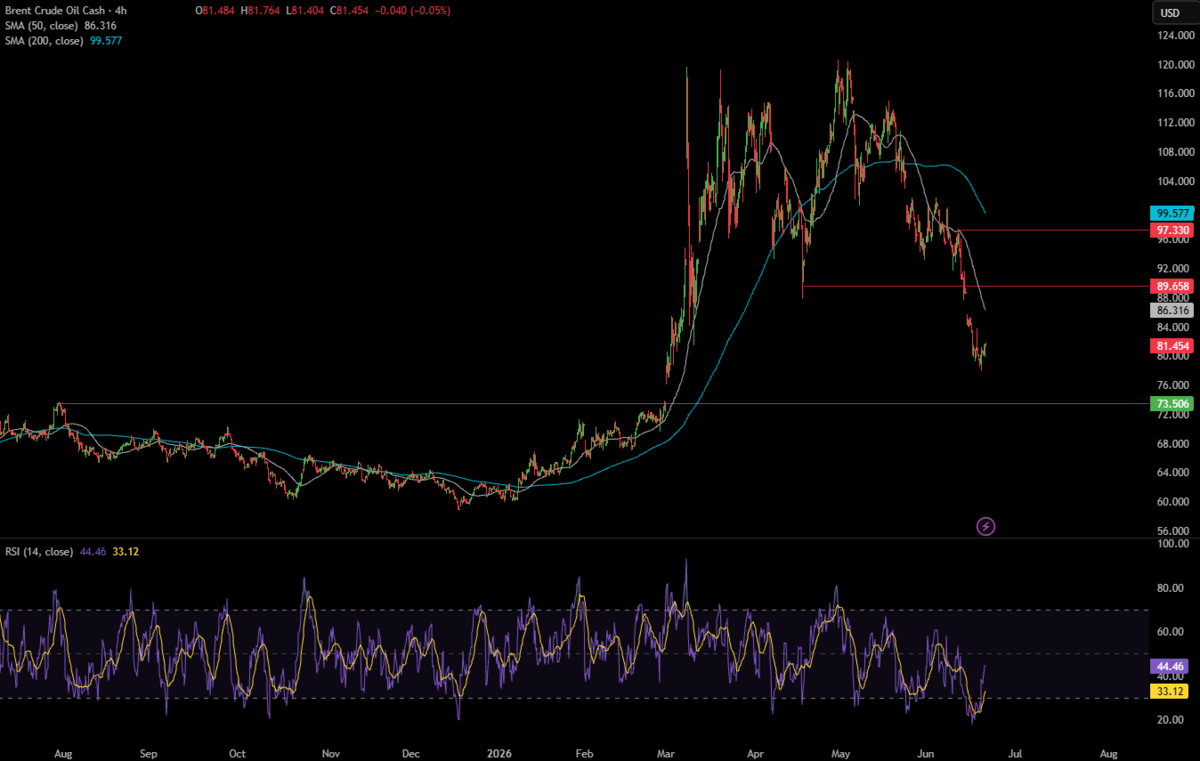
Implementation progressed more quickly than markets anticipated. The US Central Command lifted restrictions on Iranian port traffic, and Kuwait ended its force majeure declaration. On Thursday, three Saudi-flagged supertankers carrying about 6 million barrels of crude exited the Strait, broadcasting their locations for the first time since the conflict began. OPEC Secretary General Haitham Al Ghais stated the supply disruption that pushed prices above $120 was “well and truly over.”
The 60-day negotiation window is now open. Trump stated Iran “gets no money, not ten cents” during this period, and the final framework addresses nuclear limits, sanctions removal, and reconstruction commitments. As the energy pass-through fades, the inflation impulse that drove the ECB hike, BoJ move, and FOMC hawkish pivot is now reversing.
Central bank super-week & FOMC hawkish surprise
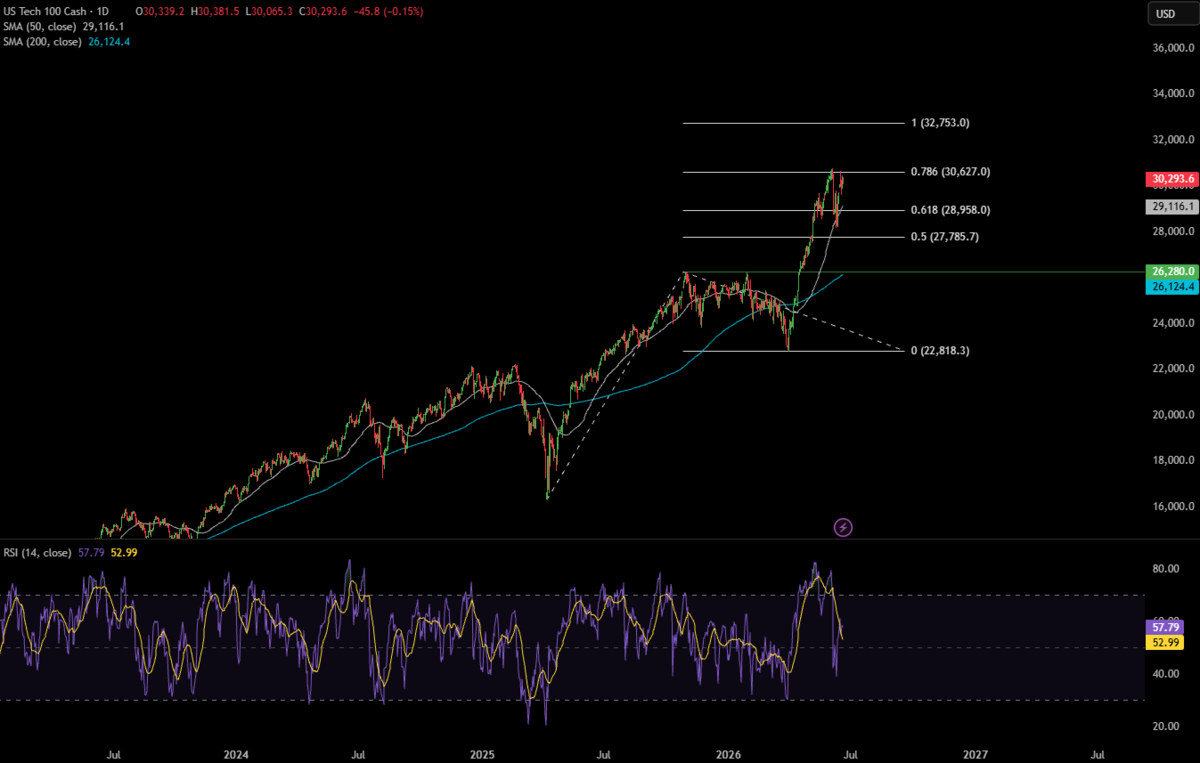
Warsh’s FOMC debut on Wednesday was pivotal. The Committee maintained rates at 3.50–3.75% with a unanimous 12-0 vote, but the dot plot shifted to a more hawkish stance: the median 2026 dot rose from 3.4% in March to 3.8%, suggesting a 25bp hike before year-end. Nine of 18 participants project a hike in 2026, six anticipate two hikes, and 17 of 18 see inflation risks as skewed to the upside. The PCE inflation projection increased to 3.6% from 2.7%. Despite these factors, the Nasdaq index continues to move higher, trading around the 33700 ATH.
The Bank of Japan made a historic move, raising rates by 25bp to 1.00% in a 7-1 vote. This is the highest policy rate since September 1995 and the first rate change since December. Governor Ueda was absent due to illness, with Deputy Governor Uchida leading the press conference. Member Asada dissented as the reflationary hawk.
Other central banks maintained rates but leaned toward a more hawkish stance. The RBA paused at 4.35% after three consecutive hikes, with Bullock describing it as “a pause, not a pivot.” The BoE held at 3.75% on a 7-2 vote, with Greene joining Pill in dissent for a hike, while Bailey called holding “the right position.” UK CPI for May was 2.8%, below the 3.0% consensus, reducing immediate inflation pressure on the BoE.
Week ahead
PBoC Loan Prime Rate (Monday, 01:15 UTC+0)
The People’s Bank of China will set its 1-year and 5-year Loan Prime Rates at 01:15 UTC+0 on Monday. The 1-year LPR has remained at 3.00% and the 5-year at 3.50% since the May cuts. The easing campaign aims to support consumer demand and the property sector amid ongoing tariff uncertainty and weak global oil prices.
Markets see little chance of a rate change at this meeting. China’s headline CPI for May rose 1.2% year-on-year, while the property sector remains weak and industrial profits continue to soften. The Iran deal eases energy import costs but does not address broader demand challenges. Policymakers have indicated that further easing is possible later this year if external conditions worsen.
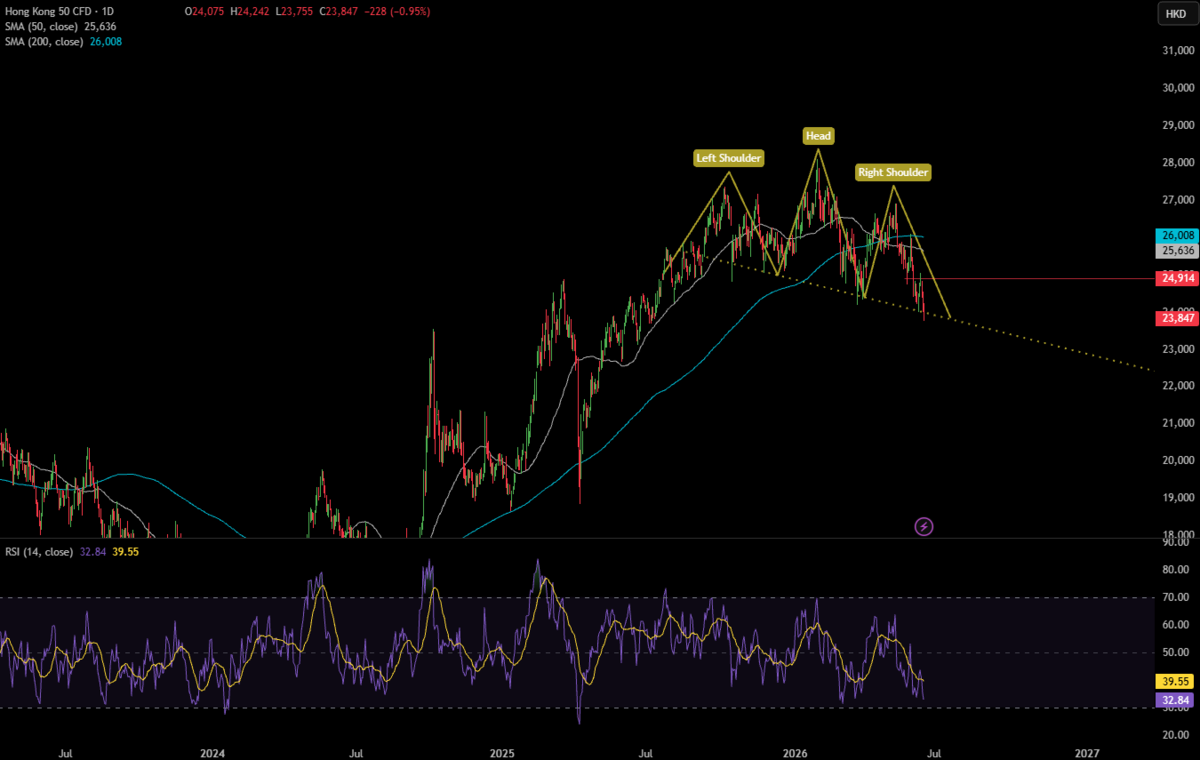
The Hang Seng index has responded to policy-support signals. A surprise rate cut would likely boost the index by providing additional liquidity to the property and consumer sectors.
Canada CPI May (Monday, 12:30 UTC+0)
Statistics Canada will release the May CPI report at 12:30 UTC+0 on Monday. April CPI rose 2.8% year-on-year, with core measures around 2.5-2.6%. The BoC held rates at 2.25% for the fifth consecutive meeting on 10 June. At that meeting, Macklem stated that “consecutive hikes may be needed” if energy-driven inflation persisted, but this view is now less relevant given Brent’s 8.5% decline this week.
The May CPI will partially reflect elevated oil prices prior to the Iran deal, with gasoline and transport components likely to increase the headline figure. The key focus will be on core trim and core median measures, which exclude volatile food and energy prices and have remained near the upper end of the 1–3% target range. Q1 GDP contracted, the labor market has softened, and uncertainty around the CUSMA review continues.
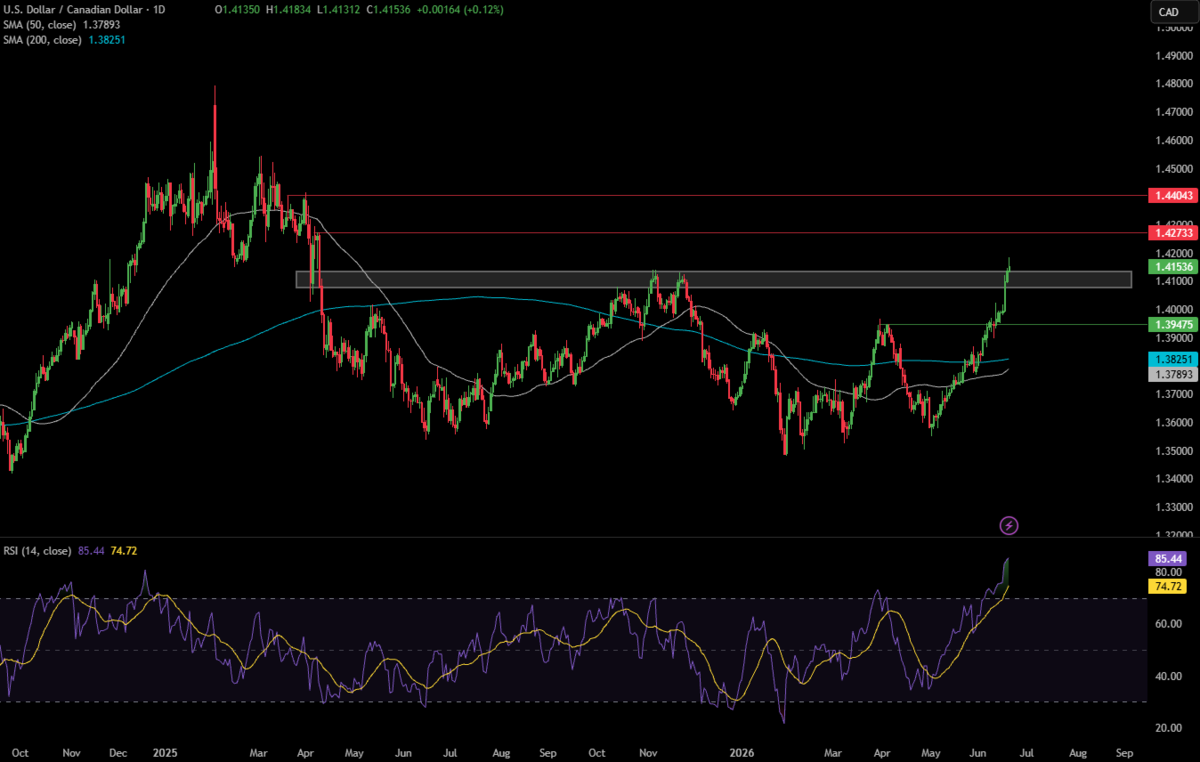
A strong core CPI reading would support a lower USD/CAD, reinforcing the BoC’s remaining hawkish stance ahead of its next decision. Conversely, a softer print, especially with the energy impulse fading, would weaken the Canadian dollar and push USD/CAD higher as markets anticipate potential rate cuts.
June Flash PMIs (Tuesday)
S&P Global will release June flash PMIs for Europe and the US on Tuesday: Germany at 07:30 UTC+0, Eurozone at 08:00, UK at 08:30, and US at 13:45. These are the first major activity indicators since the ECB’s 11 June hike and the FOMC’s hawkish pivot, and may also reflect the Iran deal’s impact on supply pressures.
The Eurozone Composite PMI has hovered near the 50 expansion threshold, with services outperforming manufacturing. The ECB raised rates due to inflation rising to 3.2% in May following the Hormuz energy shock, rather than strong activity. A weak PMI, combined with energy relief from the Iran deal, would complicate the case for another hike. Germany remains the bloc’s weakest link, with manufacturing still in contraction.
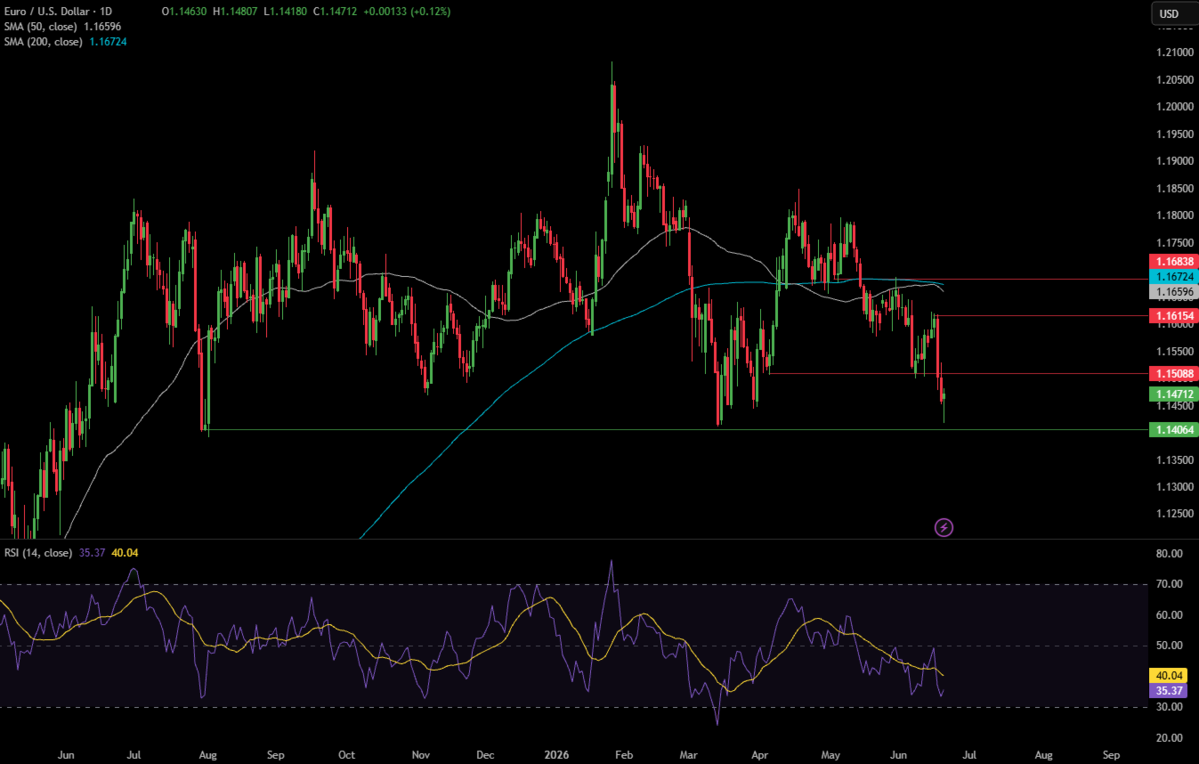
EUR/USD best reflects the divergence between central banks. A strong Eurozone services PMI would support EUR/USD by reinforcing the ECB’s tightening options, while a weak print would pressure the euro, especially against a USD strengthened by Warsh’s hawkish debut.
Australia CPI monthly (Wednesday, 01:30 UTC+0)
The Australian Bureau of Statistics will release the May monthly CPI indicator at 01:30 UTC+0 on Wednesday. April’s CPI was 4.2% year-on-year, down from 4.6% in March but still above the RBA’s 2–3% target range. This release is the first major data point following the RBA’s 16 June hold at 4.35% and the Iran deal, which has significantly altered the energy outlook.
The May CPI will provide insight into services inflation and the pace of energy pass-through. The RBA’s decision to hold reflected the balance between the impact of three prior hikes and the risk of second-round effects from the Hormuz shock. With Brent prices returning to pre-war levels, this risk is diminishing, but the labor market remains tight, and underlying inflation has been more persistent than headline figures suggest.
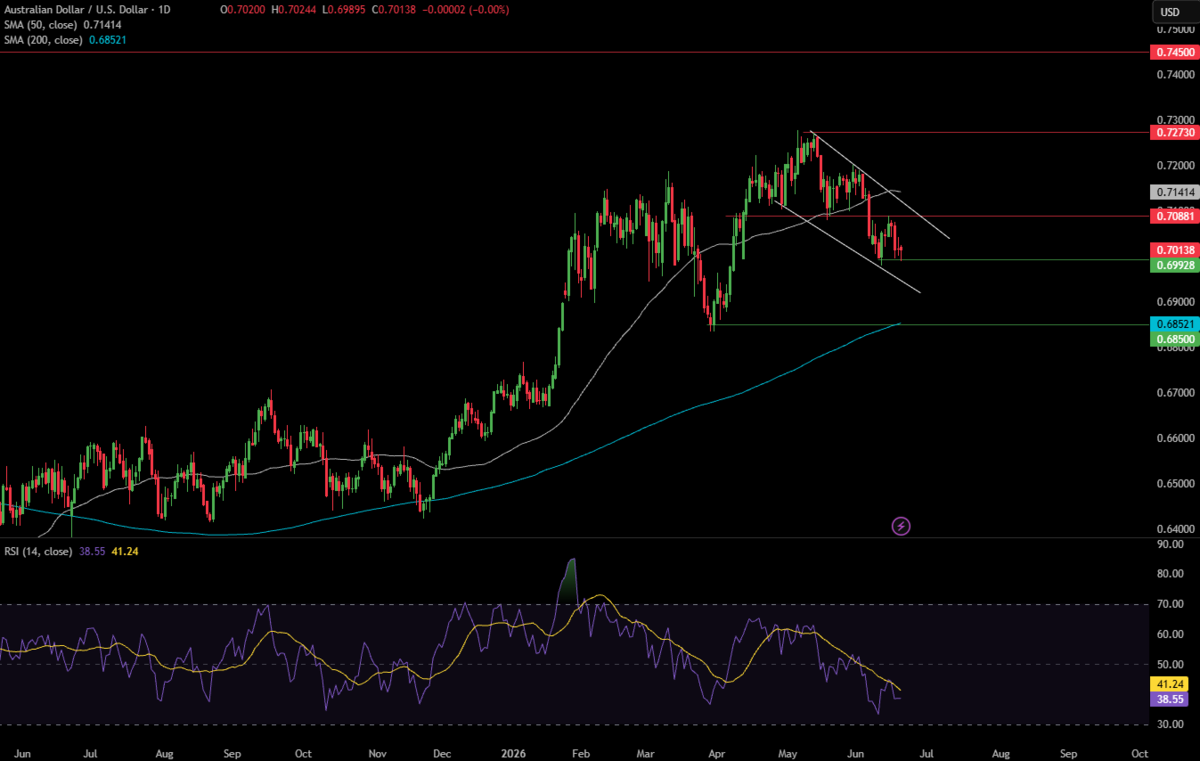
The next RBA meeting is scheduled for 11 August. A lower CPI reading would increase expectations for an earlier rate cut and put pressure on AUD/USD. Conversely, a higher print would keep the outlook for the next move uncertain and support the currency pair.
US Core PCE for May (Thursday, 12:30 UTC+0)
The Bureau of Economic Analysis will release May PCE data at 12:30 UTC+0 on Thursday. This is the most significant release of the week and the first inflation data following Warsh’s hawkish FOMC pivot. April PCE rose 0.4% month-on-month and 3.8% year-on-year, with core PCE at 0.2% and 3.3%, respectively. Wells Fargo forecasts May PCE at 0.5% month-on-month and 4.1% year-on-year, with core PCE at 0.3% and 3.4%. Final Q1 GDP and weekly Initial Jobless Claims will also be released.
The May PCE data reflect the period before the Iran deal, so the energy pass-through that raised CPI to 4.2% remains present. The FOMC’s updated projections raised the 2026 PCE forecast to 3.6% from 2.7%, and Wells Fargo’s estimate of 4.1% aligns with this revised outlook. For the 17 of 18 participants highlighting upside inflation risks, a significant downside surprise would be required to challenge the new hawkish stance.
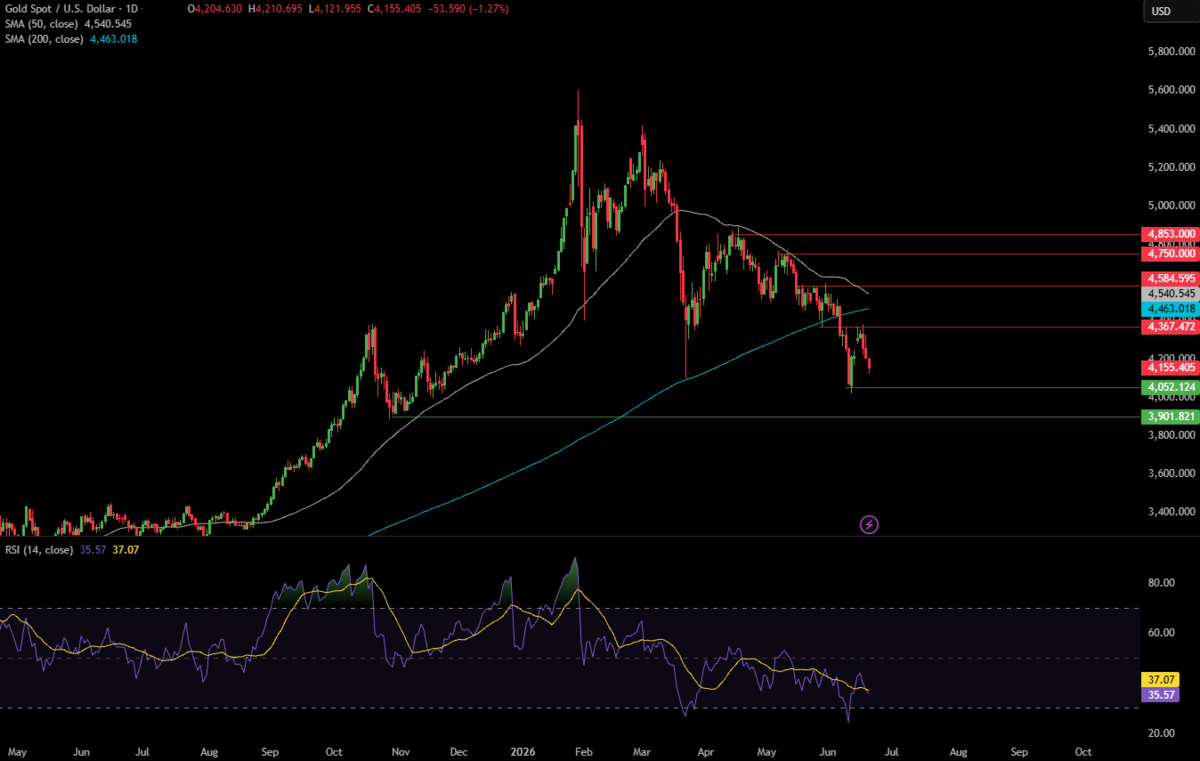
A strong Core PCE reading would increase real yields and likely push gold prices lower as expectations for further rate hikes strengthen. Conversely, a softer print, especially if the effects of the Iran deal appear in forward-looking components, would support gold as the hawkish narrative weakens.
Tokyo CPI June (Thursday, 23:30 UTC+0)
Japan’s Statistics Bureau will release Tokyo CPI for June at 23:30 UTC+0 on Thursday, which is Friday morning in Japan. This is the first inflation reading following the BoJ’s 17 June hike to 1.00%. Tokyo CPI is the most reliable leading indicator of the national CPI for the following month. Wholesale prices rose 6.3% year-on-year in May as the Iranian energy shock significantly increased import costs.
The BoJ’s case for tightening is based on broadening inflation. Uchida emphasized at the press conference that “the pass-through of rising oil prices has been progressing at a relatively faster pace” and could affect consumer prices across many categories. A Reuters poll shows economists expect the BoJ to reach 1.25% by Q4, with two-thirds anticipating roughly semi-annual rate increases.
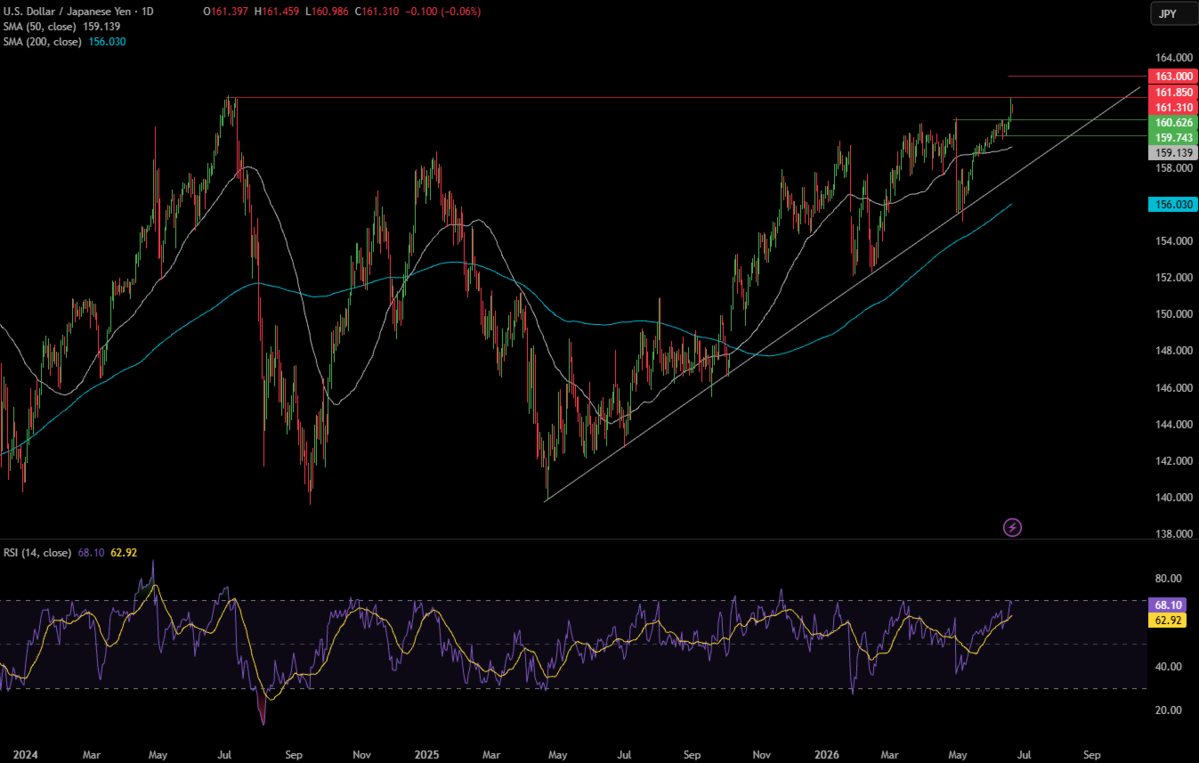
USD/JPY remained near 161.40 following the BoJ decision, close to historical intervention levels. A strong Tokyo CPI reading would strengthen the yen and push USD/JPY lower, supporting the path toward 1.25% rate.
Bottom line
This week, the main cross-asset driver is the unwinding of the Iran energy shock alongside the Federal Reserve’s new hawkish stance. Brent’s 8.5% weekly decline removes the supply-driven inflation impulse that supported the ECB hike, BoJ move, and Warsh’s revised dot plot. However, this drop comes too late to affect the May Core PCE print, which is likely to confirm a higher-for-longer rate outlook.
Trading involves risk.
Author



 Risk Disclaimer
The content provided here is for informational purposes only. It is not intended as personal investment advice and does not constitute a solicitation or invitation to engage in any financial transactions, investments, or related activities. Past performance is not a reliable indicator of future results.
The financial products offered by the Company are complex and come with a high risk of losing money rapidly due to leverage. These products may not be suitable for all investors. Before engaging, you should consider whether you understand how these leveraged products work and whether you can afford the high risk of losing your money.
The Company does not accept clients from the Restricted Jurisdictions as indicated in our website/ T&C. Some services or products may not be available in your jurisdiction.
The applicable legal entity and its respective products and services depend on the client’s country of residence and the entity with which the client has established a contractual relationship during registration.