8 min read
 Weekly recap
US stocks declined in a volatile week, marking the S&P 500’s first loss in three weeks. The index fell 1.6% to 7,457.69, the Nasdaq dropped 2.9%, and the Dow Jones lost 0.9% to 52,146.42. A broad selloff in AI and semiconductor stocks weighed on global markets.
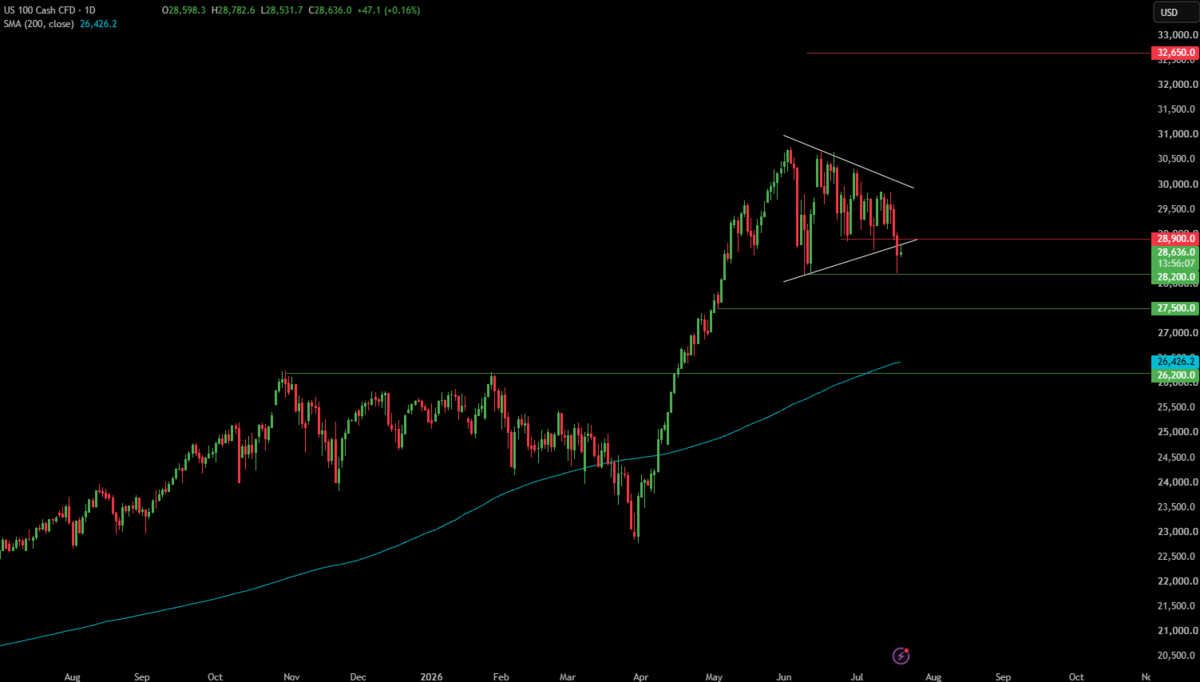
The decline in semiconductor stocks was global. The Philadelphia Semiconductor Index fell about 10% for the week, South Korea’s Kospi dropped roughly 25% from its June peak, and Taiwanese equities entered correction territory. Investors are concerned that AI hyperscalers may reduce capital spending, a move that has driven this year’s rally. IBM fell 25% after a profit warning, while energy stocks outperformed as oil prices surged.
June CPI declined sharply, down 0.4% month-on-month and 3.5% year-on-year from 4.2%, marking the largest monthly drop in over six years. This reduced the probability of a July Fed rate hike to 17% from 42%, though a September increase remains priced in at about 60%. New Chair Kevin Warsh’s first congressional testimony was hawkish, helping the dollar recover after the CPI release. The Bank of Canada kept rates at 2.25%, and China’s Q2 GDP missed expectations at 4.3%.
Oil-dominated market movements this week. The US reinstated its naval blockade of Iranian ports and imposed a 20% toll on cargo transiting the Strait of Hormuz, pushing Brent up 9.5% above $83, to its largest single-day gain since May 2020, and to around $85 by Friday. Gold fell below $4,000, marking its worst week in about six.
US–Iran escalation & Strait of Hormuz blockade
The US–Iran conflict escalated last week, as US Central Command conducted six consecutive nights of strikes on Iranian military and maritime targets. Washington reinstated its naval blockade of Iranian ports and imposed a 20% toll on cargo transiting the Strait of Hormuz. President Trump warned that, without diplomatic progress, the US may target Iran’s energy infrastructure this week.
Iran has retaliated with missile attacks on US bases in Kuwait, Jordan, and Bahrain, reportedly struck a tanker near Iran’s main export terminal, and asked Yemen’s Houthis to prepare to disrupt Red Sea shipping — widening the conflict zone. Commercial traffic through the strait, which carries close to a fifth of global oil, has slowed to a trickle. Brent climbed more than 10% on the week to around $85, a one-month high, though still well below the roughly $120 wartime peak.
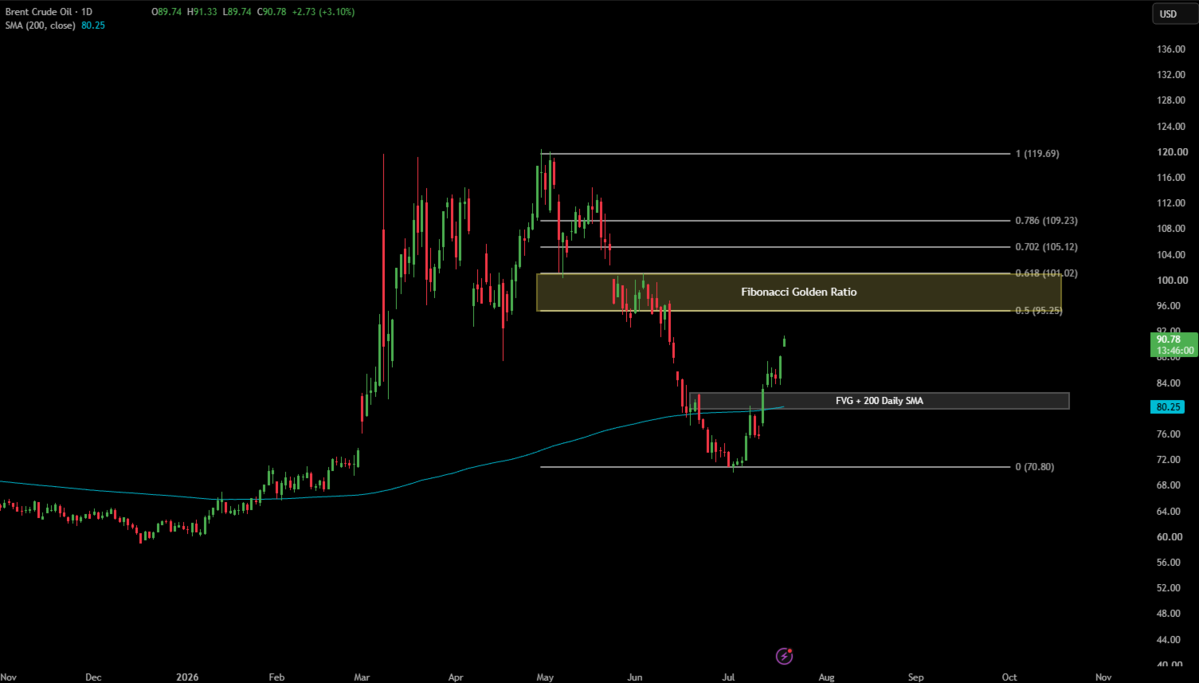
The Strait remains the swing factor for global markets. A confirmed strike on Iranian energy infrastructure or a broadening of the conflict into the Red Sea could lift Brent further, while any credible return to talks would pull Brent back toward the mid-$70s.
ECB rate decision (Thursday)
The ECB will announce its decision on Thursday at 13:45 CET, followed by President Lagarde’s press conference at 14:30 CET. After June’s unexpected 25bp hike, the first since 2023, the Governing Council is expected to keep the deposit rate at 2.25%, with markets assigning an 88% probability to this outcome.
As July is a non-projection meeting, market attention will focus on the statement and President Lagarde’s tone. The ECB remains the only major central bank still tightening, with euro-area inflation at 2.8% in June. About 70% of economists expect another hike in 2026, likely to 2.50% in September, as higher oil prices increase inflation risks. EUR/USD remains near 1.145, little changed despite the hawkish outlook, with a significant gap to US rates.
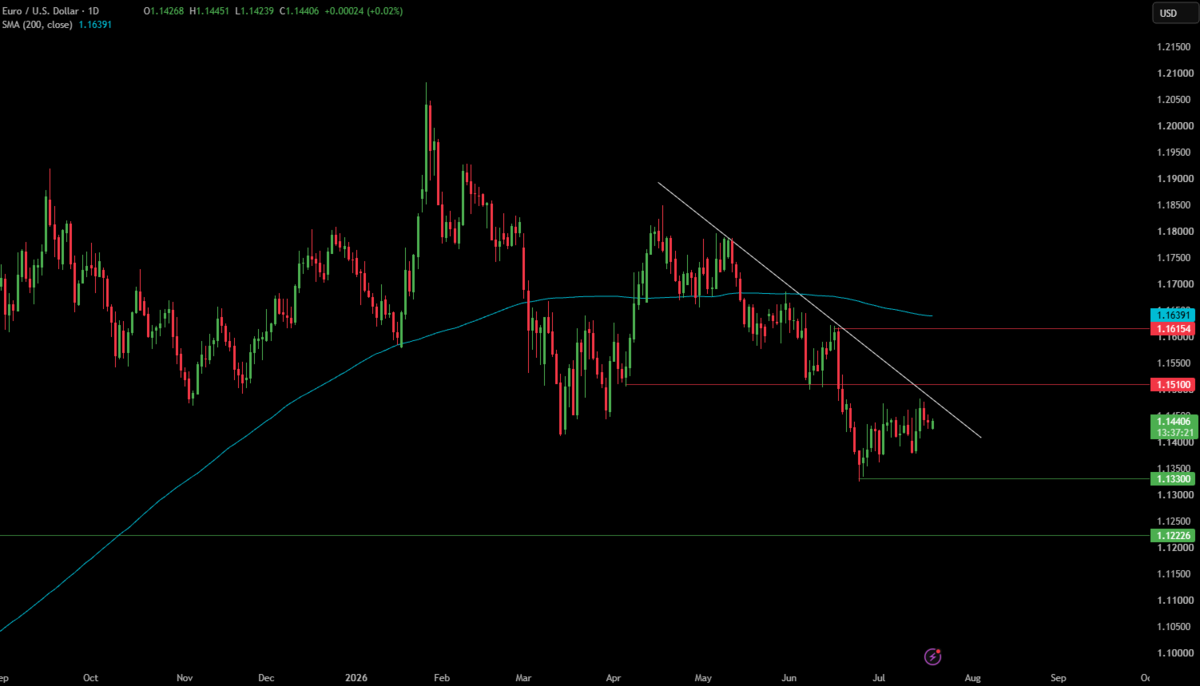
A hawkish hold that signals a possible September hike could support EUR/USD. Conversely, any indication that June’s move was isolated or increased caution about eurozone growth could weigh on EUR/USD.
UK macroeconomic data
The UK has a packed week: labor-market data on Tuesday, June CPI on Wednesday, and retail sales on Friday — all as Andy Burnham takes over as prime minister. June headline inflation is expected to ease to around 2.4–2.6% from 2.8% in May, helped by a sharp drop in petrol and diesel prices.
The political transition introduces uncertainty. Burnham’s selection of Chancellor and any signals on public spending will influence the fiscal and inflation outlook. Ofgem’s 13% energy price cap increase in July presents an additional upside risk. Inflation in cooling services would give the Bank of England more flexibility, but sterling remains sensitive to the new government’s direction. GBP/USD trades around 1.34.
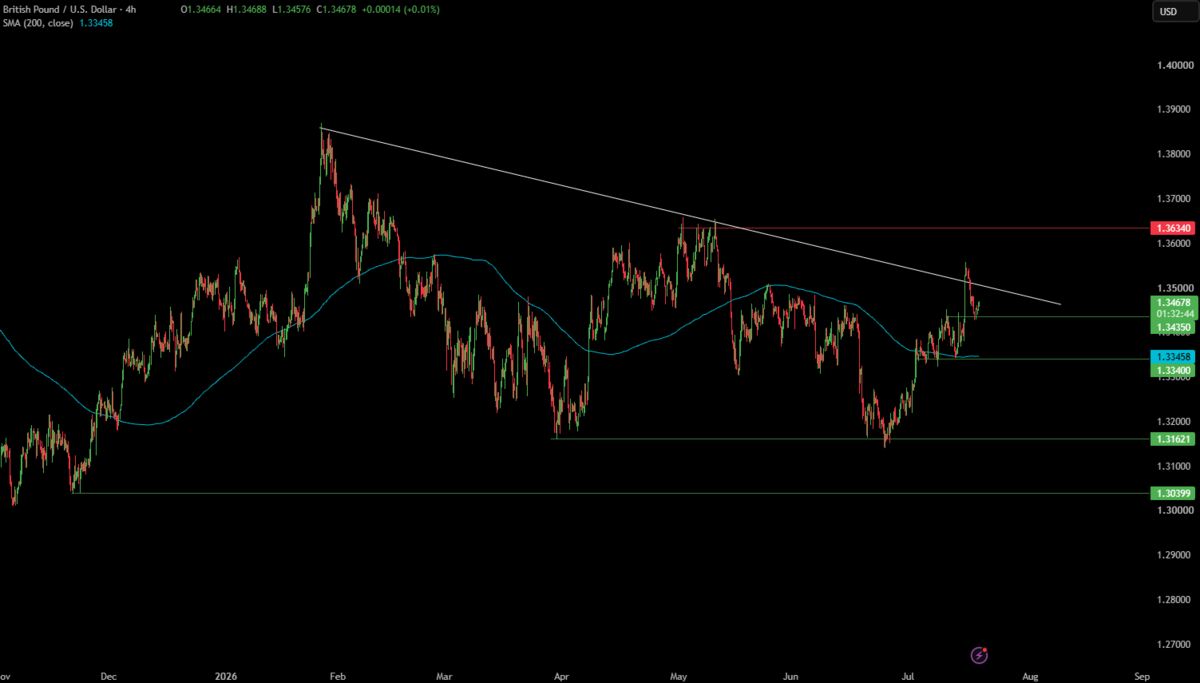
A softer CPI reading or fiscal-policy uncertainty under the new government could pressure GBP/USD. Strong wage data and a smooth political transition would support the currency.
Japan CPI (Friday)
Japan’s nationwide June core CPI (excluding fresh food) will be released on Friday and is forecast to rise to 1.6% year-on-year from 1.4% in May, driven by higher energy costs. This would mark the fifth consecutive month below the Bank of Japan’s 2% target.
The increase, partly due to oil prices linked to the Iran conflict, would support further tightening by the BoJ after rate hikes in December and June. The next meeting is scheduled for later this month. The yen remains near 40-year lows around 161 per dollar, maintaining elevated intervention risk, while Japan’s wholesale prices remain above 7%.
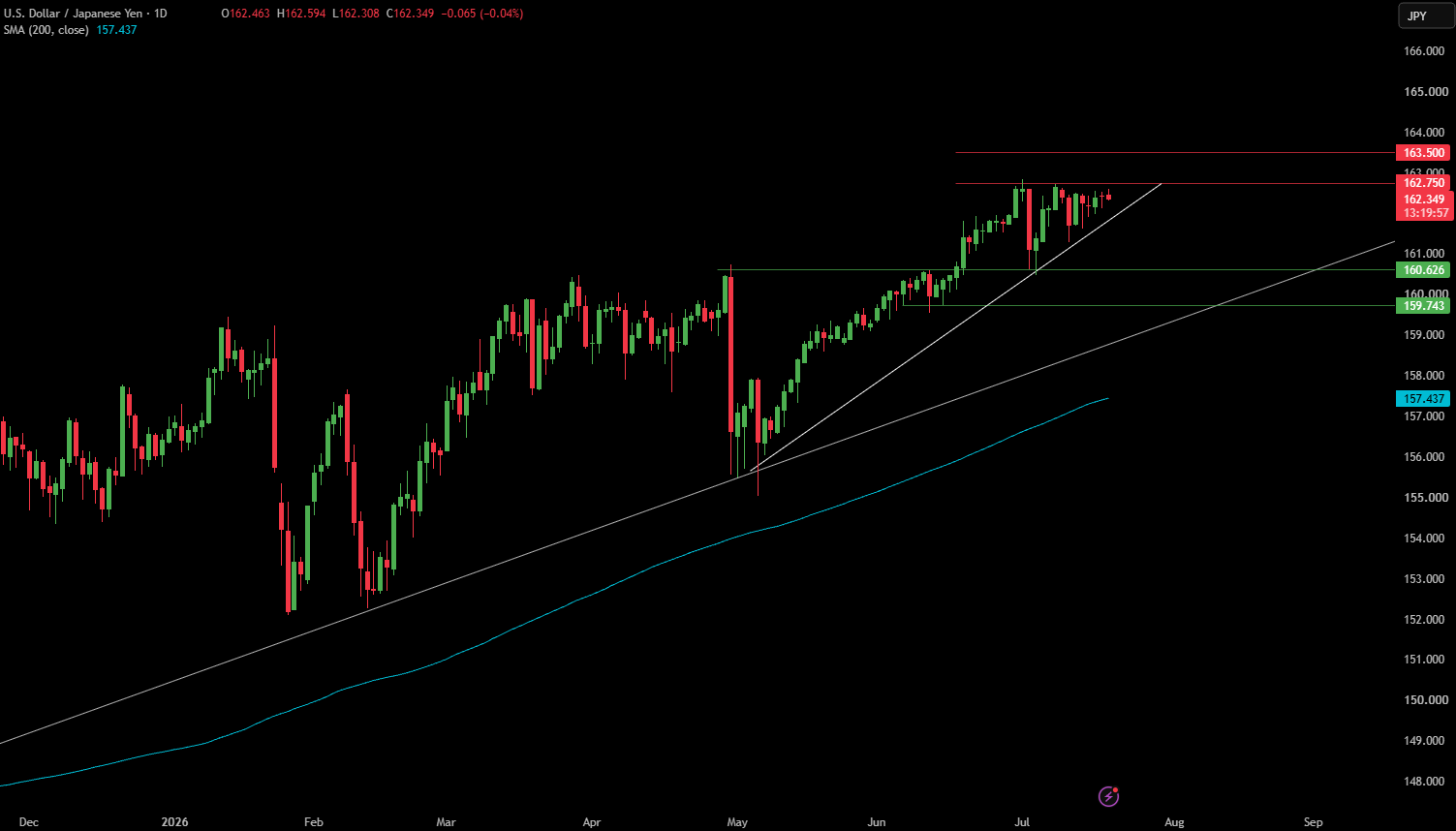
A stronger-than-expected CPI reading, which could raise BoJ rate-hike expectations, could push USD/JPY lower. A weaker result or a dovish BoJ stance could keep USD/JPY near multi-decade highs.
Global flash PMIs (Friday)
Preliminary July PMIs for the US, euro area, UK, and Japan will be released on Friday, providing the first insight into third-quarter growth. In June, the US composite PMI was 51.9, its highest in months, with services at 51.2 and manufacturing at 53.9.
The surveys will indicate whether economic activity is holding up amid the oil shock, with price components monitored for signs of new inflationary pressures. Gold has fallen below $4,000, its worst week in about six, as a hawkish Warsh, a stronger dollar, and rising Treasury yields near 4.5% outweighed safe-haven demand from the conflict.
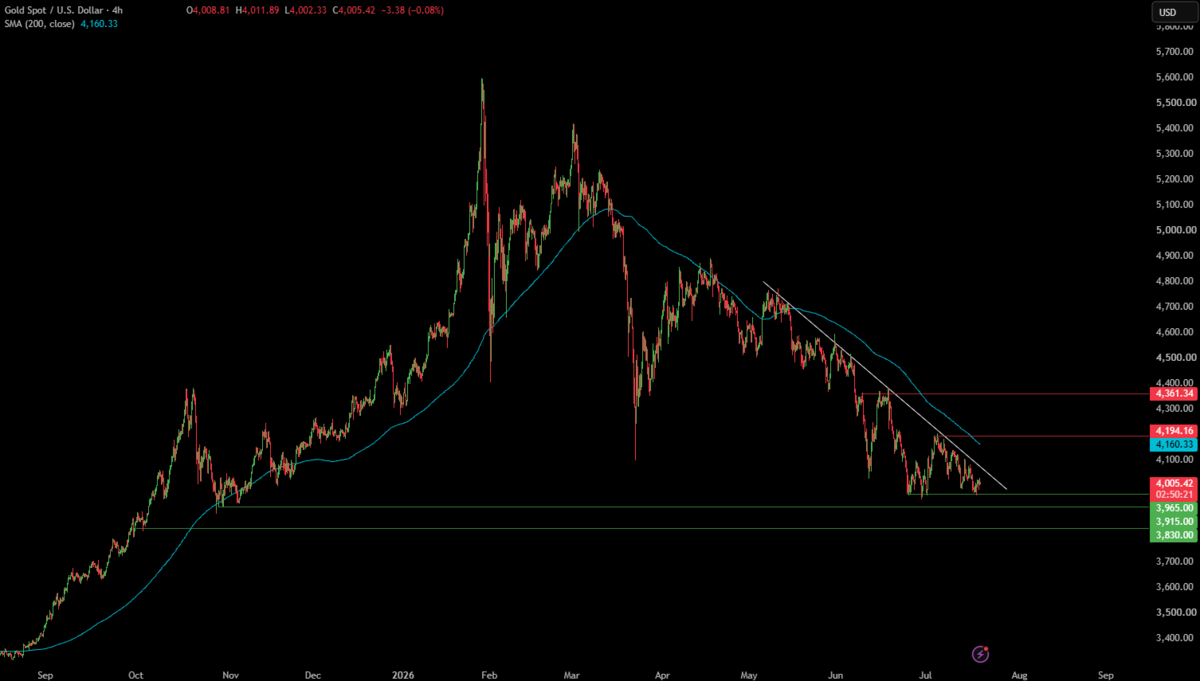
Weak PMIs, which could increase expectations for rate cuts, could help Gold stabilize. Stronger activity and higher price components would reinforce expectations for prolonged higher rates and could further pressure Gold.
Bottom line
The renewed US–Iran conflict and the Strait of Hormuz blockade remain the main drivers, keeping oil prices high and inflation risks present despite sharply lower June data. This tension shapes the week ahead: ECB guidance, the first Magnificent Seven earnings after the chip selloff, UK inflation under a new prime minister, Japan’s CPI, and Friday’s global flash PMIs. Monitor Brent for the war premium, the S&P 500 for Big Tech’s response to the AI selloff, EUR/USD and GBP/USD around the ECB and UK data, and Gold as geopolitical risks compete with a hawkish Fed.
Trading involves risk.
Author



 Risk Disclaimer
The content provided here is for informational purposes only. It is not intended as personal investment advice and does not constitute a solicitation or invitation to engage in any financial transactions, investments, or related activities. Past performance is not a reliable indicator of future results.
The financial products offered by the Company are complex and come with a high risk of losing money rapidly due to leverage. These products may not be suitable for all investors. Before engaging, you should consider whether you understand how these leveraged products work and whether you can afford the high risk of losing your money.
The Company does not accept clients from the Restricted Jurisdictions as indicated in our website/ T&C. Some services or products may not be available in your jurisdiction.
The applicable legal entity and its respective products and services depend on the client’s country of residence and the entity with which the client has established a contractual relationship during registration.