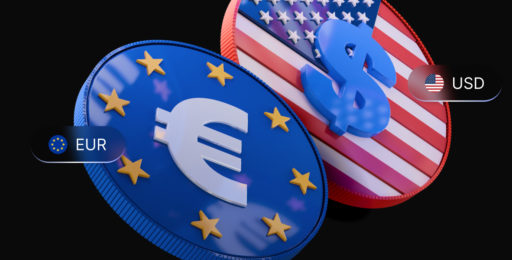

The euro hit a new 19-month low of $1.0968 on Tuesday before recovering as the U.S. dollar paused after its own 19-month peak. Traders have locked in a Fed rate hike for December, and a selloff in AI stocks has added to demand for the dollar.
The euro slumped to a new 19-month low of $1.0968 on Tuesday as the dollar climbed. It then regained ground to trade up 0.1% at $1.1011 when the greenback eased.
Meanwhile, the U.S. dollar index dipped 0.1% to 103.45, after it earlier touched 103.78. That level was its highest since April 2, 2025, and the dollar was set to snap a five-session winning streak.
Rate hike bets drive the dollar
The greenback has been lifted this month as traders have become increasingly certain of a Federal Reserve interest rate hike in December. According to the CME FedWatch tool, the probability of a 25 basis point hike stands at about 95%, while a 50 basis point hike sits at nearly 5%.
Data fed those bets. Total nonfarm payroll employment rose by 165k in October, past the consensus estimate of 65k. Then hotter-than-expected U.S. consumer price index readings showed headline prices up 0.4% M/M in October, against an anticipated 0.3%.
AI selloff adds to demand for the dollar
A rout in the artificial intelligence trade on Wall Street has also weighed on risk sentiment, leading investors to rotate into other assets such as the dollar. According to Macquarie strategist Thierry Wizman: "The USD’s strength could be attributed to a general flight-to-quality impulse" tied to concerns about global growth.
Strategists quoted by Reuters described the dollar's dip as a pause after its recent strong rally, rather than the start of a broader retreat. In the same report, the euro rose 0.2% to $1.10133 after slipping to a low of $1.0983 earlier in the session.
Jane Foley, head of FX strategy at Rabobank, said a period of consolidation around the $1.10 level was likely before the market was confident to push the euro lower.
Sources: Investing.com, Investing.com
Trading involves risk.



 Risk Disclaimer