10 min read
Recent weeks recap:
US global stocks recap
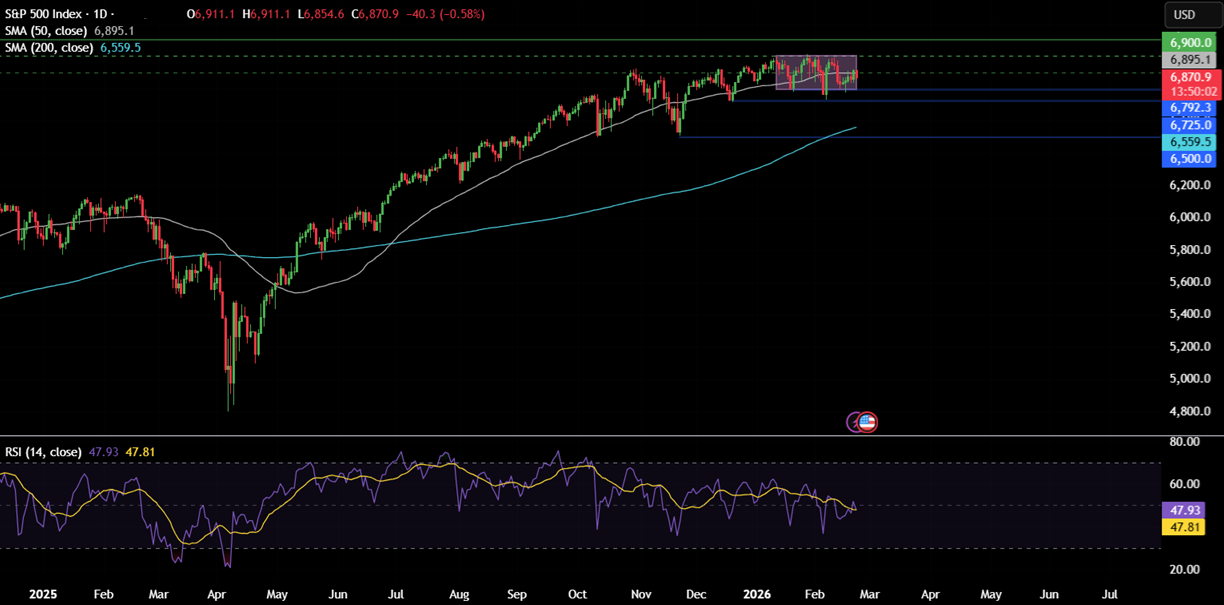
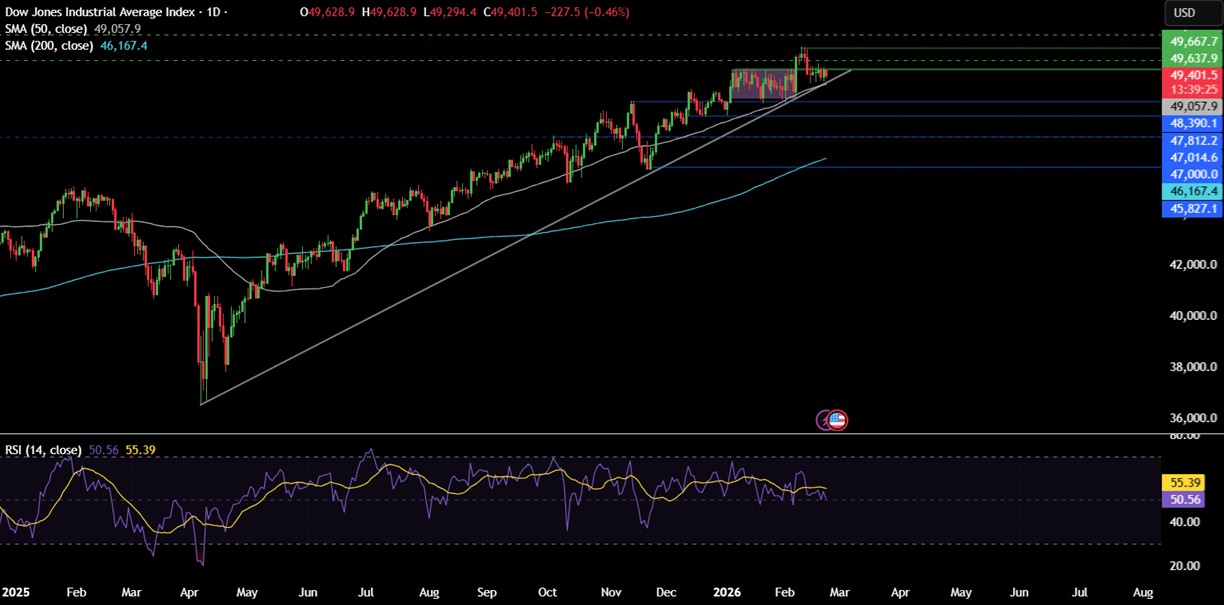
The S&P 500 gained 1% last week, while the USD gained 0.9%. The gains came despite a deepening crisis in the Middle East, which sent oil prices to six-month highs. U.S. President Trump also dominated the news following a Supreme Court decision upholding a ruling that Trump’s reciprocal tariffs were imposed illegally. Trump protested the move by introducing a universal 10% tariff on all imports and then lifting this to 15% over the weekend, insisting on its legality.
Major US data/themes
On the data front, the US core PCE, the Fed’s preferred inflation gauge, rose to 3% YoY in December, up from 2.8%. However, US Q4 GDP was significantly weaker than forecast as the hit from the US government shutdown was larger than expected. US Q4 GDP slowed to 1.4% annualised, down from 4.4% in Q3 and missing forecasts of 3%. These data points followed the minutes of the January FOMC meeting, which were more hawkish than expected, raising questions about the Fed’s outlook for rates.
US-Iran tensions and developments surrounding trade tariffs were also key themes and will remain in focus this week.
Gold moves
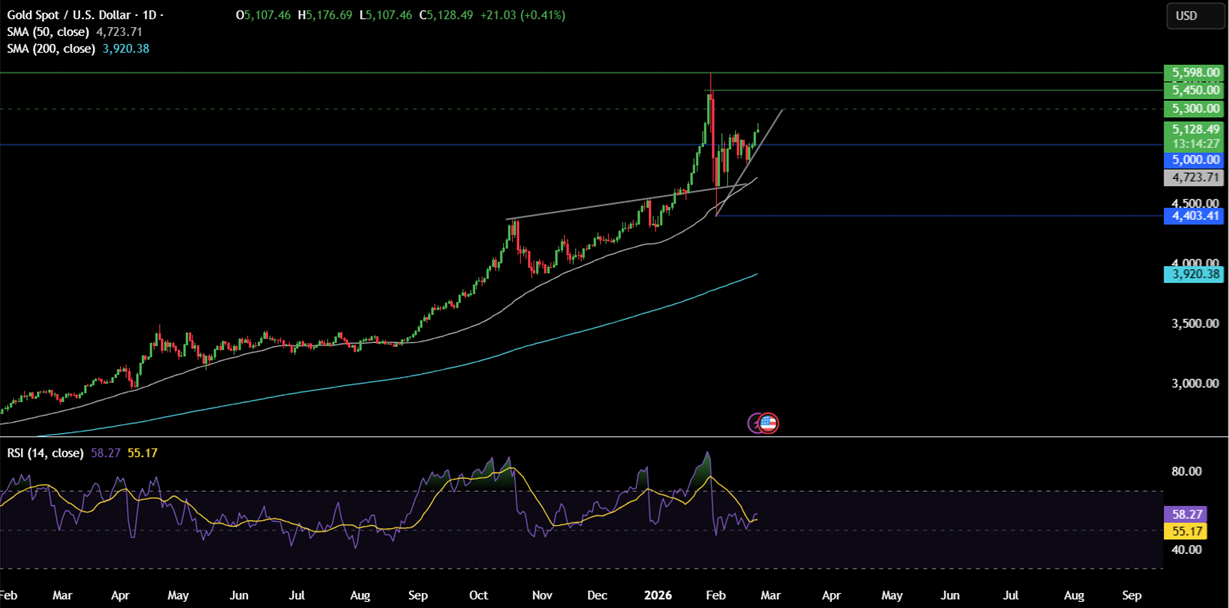
Gold rose 1.2% last week, marking the third straight weekly rise. The precious metal benefited from geopolitical uncertainties between Iran and the US, trade tariff uncertainty following the Supreme Court ruling on Trump’s tariffs on Friday. Investors fretted that the news could put stress on government finances.
Gold has extended its gains on Monday amid a risk-off mood in the market and USD dollar weakness after Trump announced 15% global tariffs on imports into the US. Trade uncertainties and geopolitical tensions are overriding the Fed’s more hawkish stance. Tariff developments and Fed speakers will likely drive Gold this week.
Oil moves
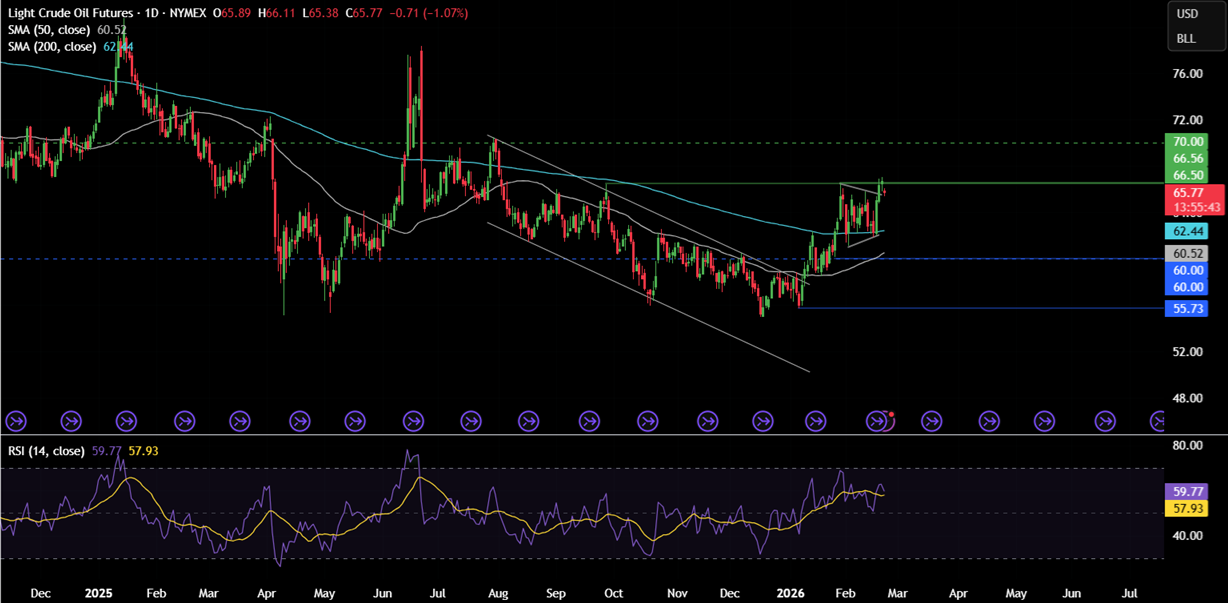
Oil prices rose by over 5.5% last week, escalating tensions between the US and Iran. The jump higher came after U.S. President Trump said he was considering a limited military strike on Iran and would tell Tehran it had 10 to 15 days to reach a nuclear deal. The US has seen its largest military buildup in the Middle East since 2003, raising concerns of broader conflict.
Iran produced over 3 million barrels per day of oil, accounting for around 3% of global output. There are also concerns about Iranian retaliation, which could affect the Strait of Hormuz, a key energy transit route.
The market will remain focused on any geopolitical developments as the third round of talks takes place this week. Attention will also be on US crude oil inventory data after figures last week showed that inventories fell by 9 million barrels, marking the steepest draw since early September. A second straight week of steep draws could lift oil prices further.
Indian markets
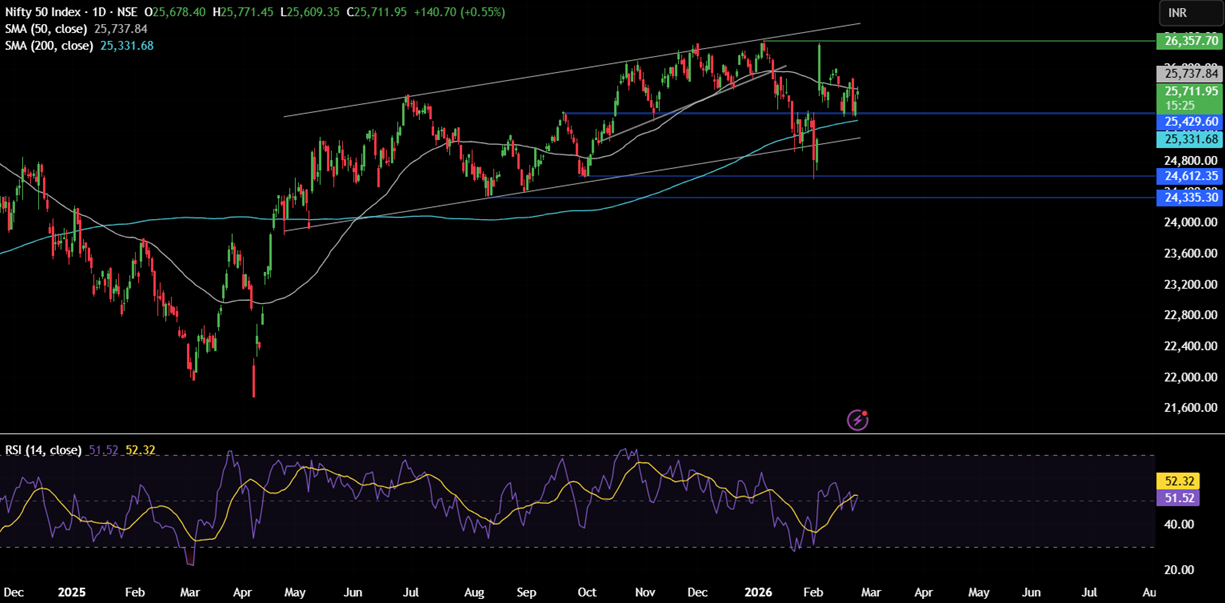
The Nifty and the Sensex rose modestly by 0.3% last week, despite weakness in IT stocks and uncertainty over global tariffs. Market volatility remained elevated due to global geopolitical developments, fluctuations in oil prices, and changes in U.S. trade policy.
Foreign institutional investor (FIIs) activity remained muted, selling shares worth Rs 2011 crore so far in February.
Meanwhile, domestic institutional investors (DIIs) supported the market, purchasing shares worth Rs 14111 crore.
Indian PMI showed that business activity rose to a 3-month high in February, driven by strong manufacturing output and robust domestic demand. While the manufacturing PMI rose to 57.5, services activity remained strong at 58.4, indicating overall economic expansion despite rising inflation.
Key Indian market drivers this week will include the fallout from the latest round of tariffs announced by President Trump, US PPI inflation, Fed speak, and Nvidia earnings. Meanwhile, in India, Q4 GDP numbers will be released.
USD/INR rose 0.19% last week, settling on Friday at 90.73, amid Rupee weakness, as the absence of FII buyers in the Indian stock market proved a drag.
Pakistan markets
The Pakistan Stock Exchange (PSX) finished in the red for the fourth consecutive week, with the KSE 100 index falling below 170,000 after plunging a record 6,683 points. The sharp selloff came amid mounting geopolitical tensions and a surge in global oil prices, triggering panic selling.
The decline came as oil prices soared 6% in just two days, making Pakistan, as a net oil importer, particularly vulnerable to higher energy prices. This dented investor confidence and amplified macroeconomic concerns. Domestic political tensions also added to the risk-off mood.
Oil prices, geopolitical tensions, and domestic developments will drive sentiment this week.
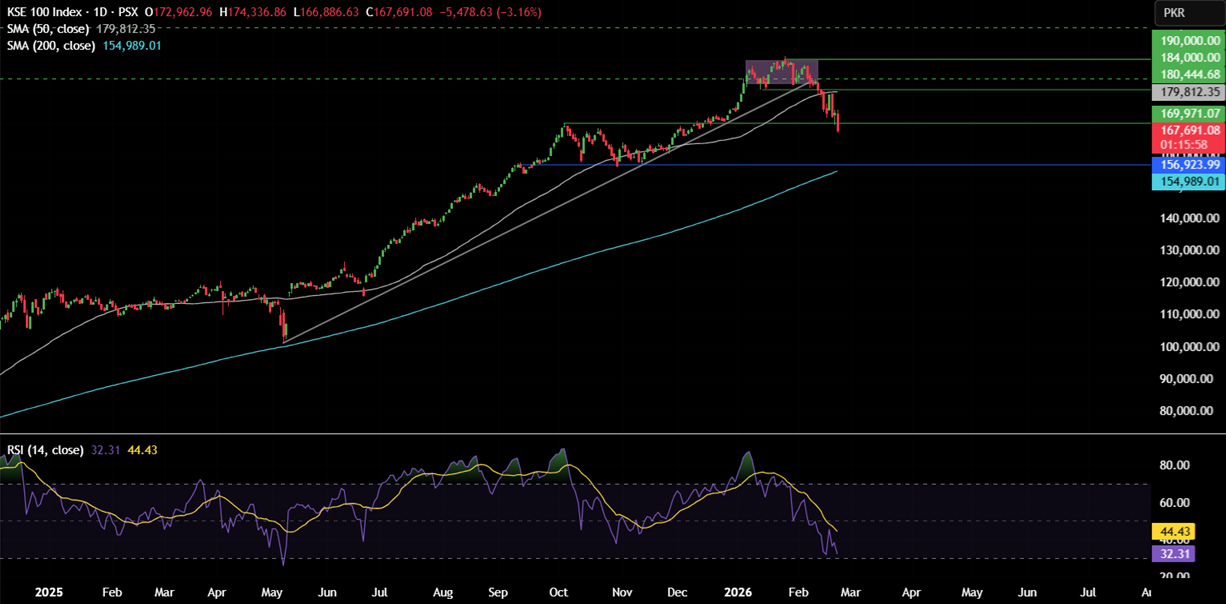
USD/PKR FELL -0.1% last week to settle at 279.60 and is falling a further 0.5% at the start of the new week amid USD weakness.
Week ahead (US & Asia)
Trade tariff uncertainty
President Trump said he would impose 10% tariffs on global imports for 150 days under Section 122 of the US trade law, following the US Supreme Court’s ruling that the earlier tariff regime was illegal. Trump then raised this to 15%, the maximum allowed under the statute, intensifying worries of retaliatory measures and potential disruptions to global supply chains.
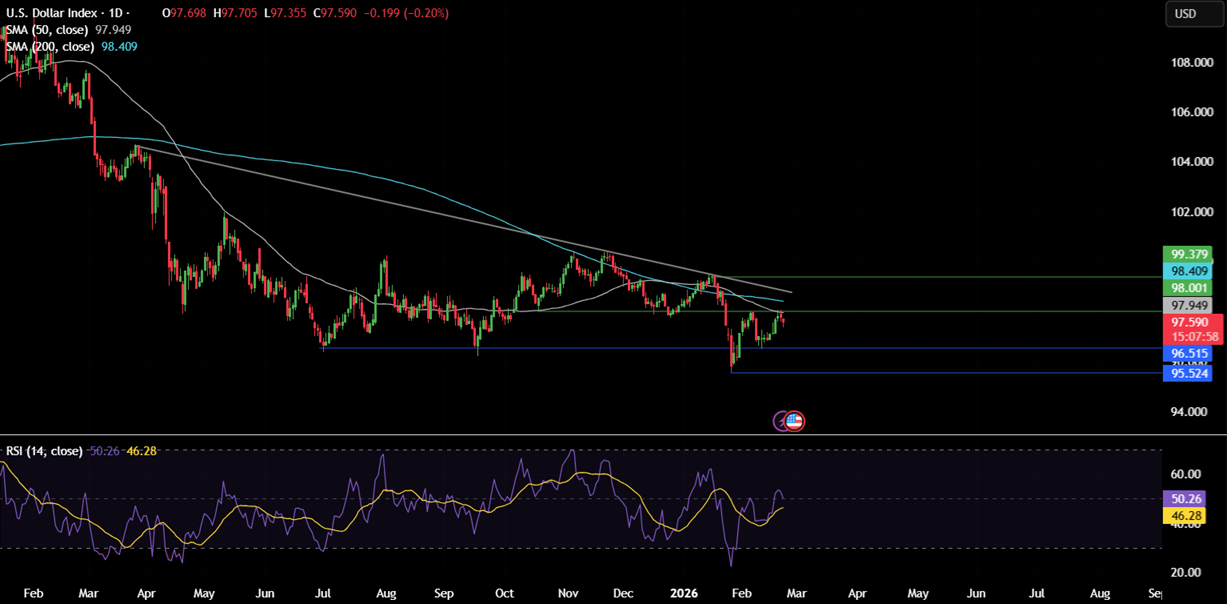
The announcement is weighing on the risk appetite at the start of the week, with investors backing the “Sell America” trades. US futures are lower, as is the USD dollar, while Gold is rising on safe-haven flows. Investors will continue to monitor developments, with rising trade uncertainty likely to drive a risk-off response.
Fed speak & US consumer confidence (Tuesday)
The Fed is currently stuck in limbo, with the chance of another rate cut under Federal Reserve chair Jerome Powell seemingly diminishing due to recent strong US data releases. Core CPI, the Fed’s preferred inflation gauge, remains sticky, and the recent nonfarm payroll report showed that the US labour market was stabilising. Even the weak Q4 GDP is likely to be a one-off owing to the U.S. government shutdown impact.
Attention will be on Fed speakers this week, with investors likely to react more favourably to dovish rhetoric, which could limit the dollar’s upside. The US economic calendar is quiet with Tuesday’s consumer confidence and Friday’s PPI index as the two releases likely to provide further insight into economic trends.
NVIDIA earnings (Wednesday)
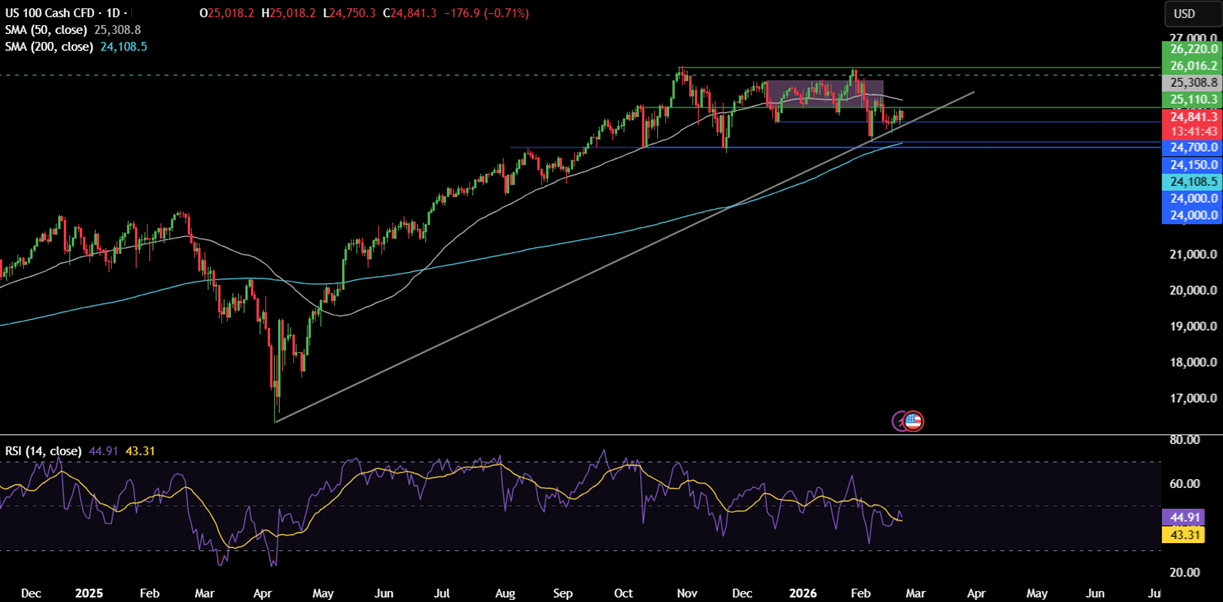
NVIDIA will report earnings on Wednesday after the market close, with investors watching results closely given its leadership in AI. NVIDIA continues to benefit from significant capital expenditure from hyperscalers, including Amazon, Google, Meta, and Microsoft, which committed $622 billion in Capex in 2026. Meanwhile, CEO Jensen Huang has reiterated the strong trajectory for AI chip demand.
Expectations are for adjusted EPS of $1.53 on revenue of $65.69 billion, with gross margins expected to rise to 74.97%, up from 73.6% in Q3, and data centre revenue expected to be $59.9 billion, up from $51.2 billion.
Looking ahead, projections for Q1 of 4 EPS of $1.66 on revenue of 70.96 billion. The earnings come after recent market nerves surrounding AI and sectors expected to be disrupted, versus those expected to benefit. With this in mind, solid Nvidia earnings could help support the tech sector more broadly and the Nasdaq, which has underperformed its major peers.
Tokyo CPI (Thursday)
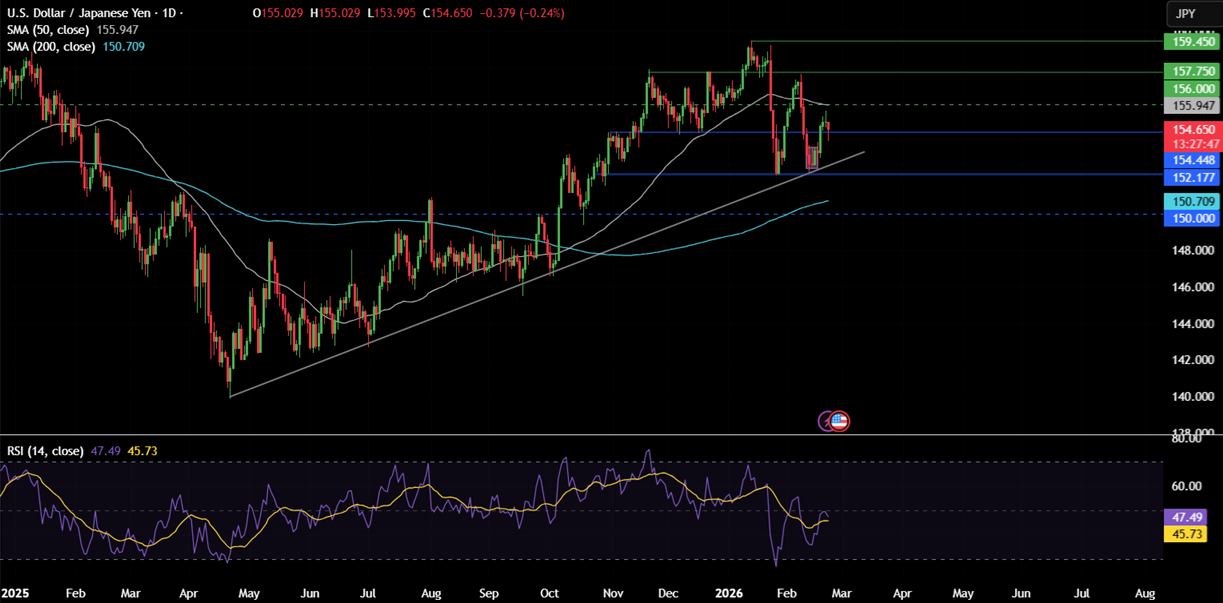
Tokyo CPI for February is due this week and is seen as a leading indicator for national price trends, with investors watching for any further cooling after January’s slowdown. Previously, data showed that Tokyo CPI cooled to 1.5% from 2%, below the 1.8% expected, while core inflation fell to a 15-month low of 2%. The data comes after the GDP data was also weaker than expected.
Slowing inflation and activity could keep the Bank of Japan in wait-and-see mode, with the central bank unlikely to rush into rate hikes whilst inflation is cooling. Easing inflation could weigh on the yen and boost USD/JPY.
India GDP (Friday)
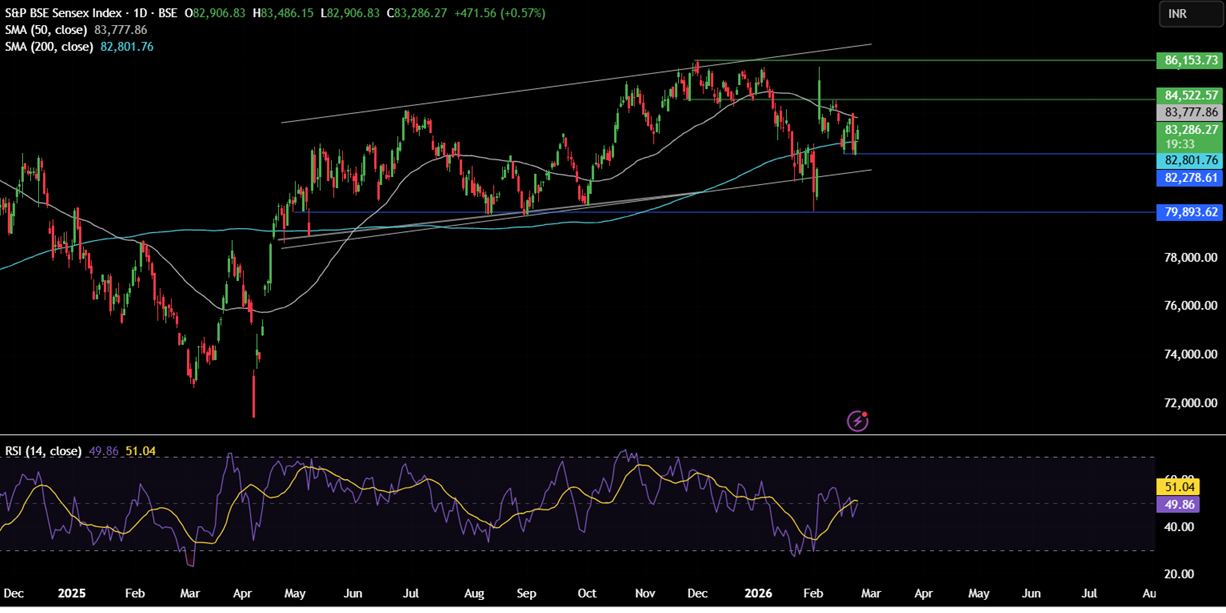
The market will focus on GDP numbers for the quarter ending December 2025 and the second estimate for full-year (FY26) economic growth. Preliminary estimates show the economy is expected to have grown by 7.4% in FY26, up from 6.5% in the previous year.
The GDP growth for Q2FY26 is 8.2%, while rating agency ICRA expects Q3FY26 GDP to moderate to 7.2% amid slower services and agriculture, despite improved industrial performance. Stronger-than-forecast growth could lift sentiment and demand for equities, boosting the Sensex and Nifty.
US PPI (Friday)
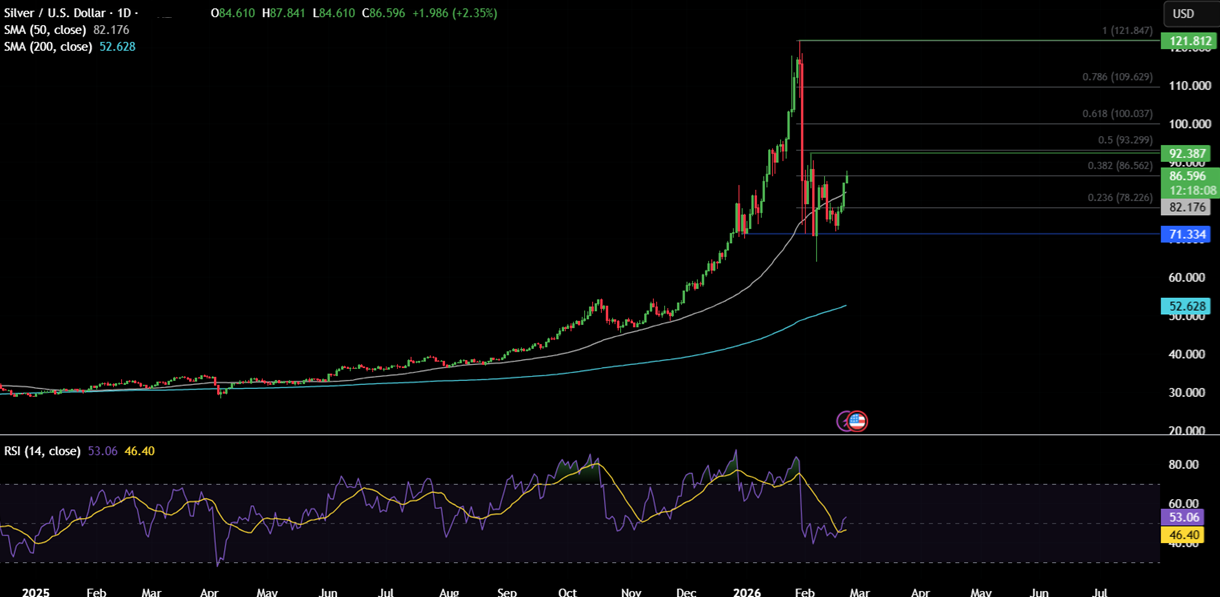
US wholesale inflation rose by 0.5% MoM in December, marking the largest increase in 5 months and bringing the annual inflation rate to 3%. Driven by services, the figures suggest persistent inflation pressures. The January reading follows the FOMC minutes, which showed that some policymakers suggested the Fed may need to raise interest rates if inflation remains above target.
This means inflation indicators are once again sharply in focus, including PPI. Hotter PPI data could push back rate cut expectations and boost the USD, impacting USD crosses and pulling precious metals such as Gold and Silver lower.
Trading involves risk.
Author



 Risk Disclaimer
The content provided here is for informational purposes only. It is not intended as personal investment advice and does not constitute a solicitation or invitation to engage in any financial transactions, investments, or related activities. Past performance is not a reliable indicator of future results.
The financial products offered by the Company are complex and come with a high risk of losing money rapidly due to leverage. These products may not be suitable for all investors. Before engaging, you should consider whether you understand how these leveraged products work and whether you can afford the high risk of losing your money.
The Company does not accept clients from the Restricted Jurisdictions as indicated in our website/ T&C. Some services or products may not be available in your jurisdiction.
The applicable legal entity and its respective products and services depend on the client’s country of residence and the entity with which the client has established a contractual relationship during registration.