8 min read
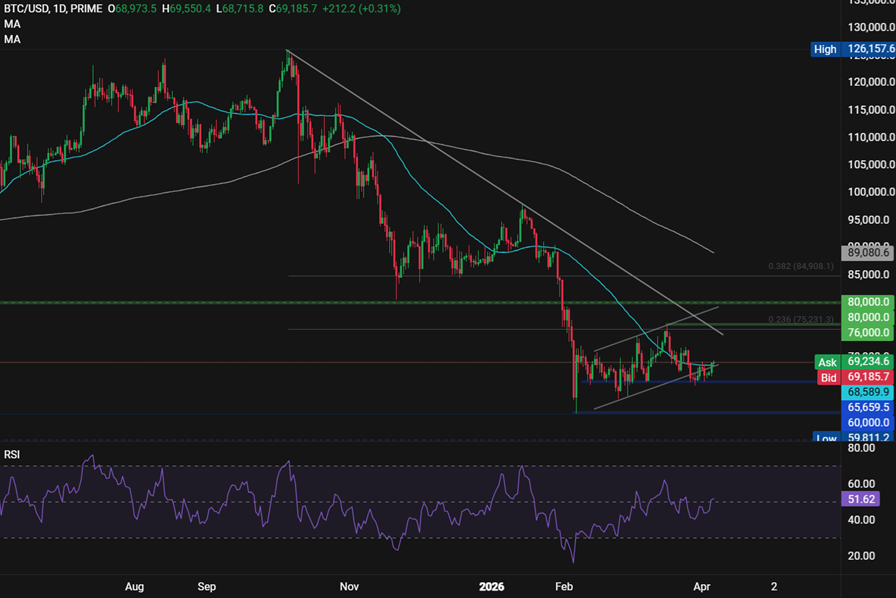
Bitcoin booked modest gains of 1.3% last week, snapping a two-week losing streak. The largest cryptocurrency started last week at 67.2k and traded in a tight range of 65k on the downside and 69k on the upside. BTC is rising at the start of the new week, pushing above 69k to bring 70k back into focus.
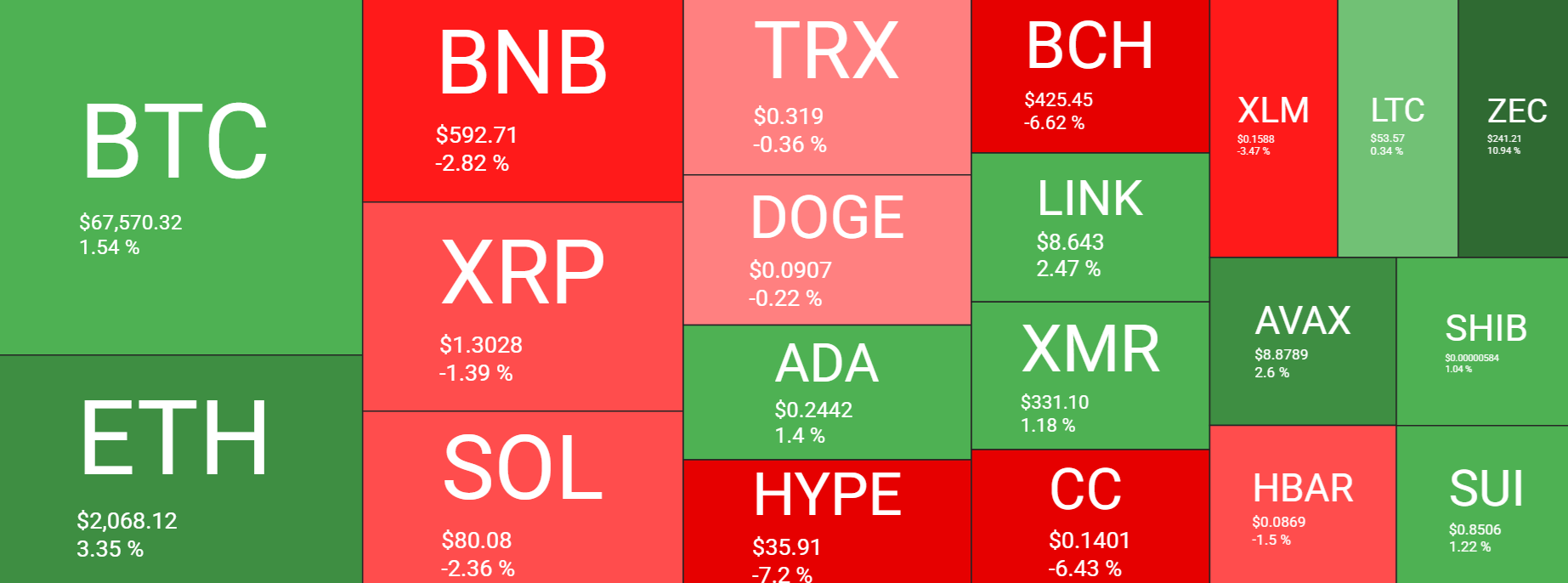
While Bitcoin recorded gains, the broader crypto market was more mixed. Ethereum rose 3.3%, outperforming most altcoins. BNB, XRP, and SOL fell 2.8%, 1.3%, and 2.3%, respectively.
The total cryptocurrency market capitalisation is rising 2.9% over the past 24 hours, reaching $2.37 trillion, matching last week’s highs and up from a low of $2.28 trillion.
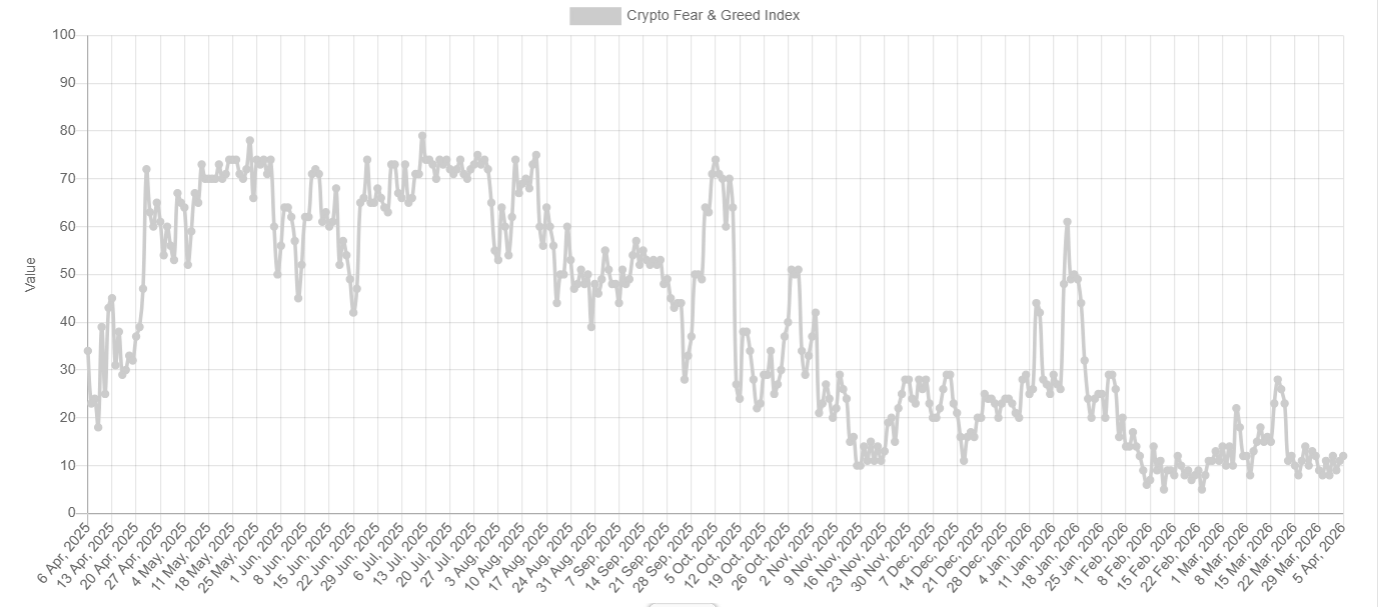
The market mood towards cryptocurrency remains extremely depressed. The Fear and Greed Index remains in Extreme Fear territory but has risen modestly from 9 to 13 amid persistent pessimism across digital assets.
Macro backdrop: geopolitics drives volatility
Bitcoin’s recent moves continue to be driven primarily by developments in Iran.
In an address to the nation last week, Trump warned that military operations could continue into late April and threatened to strike Iranian power plants and energy infrastructure, stating that Iran could be “hit extremely hard” if no deal is reached.
Trump gave a deadline of Monday, 20:00 ET, to reopen the Strait of Hormuz. However, Trump has now pushed back several deadlines, which suggests that the situation remains somewhat fluid.
Oil, yields, and macro spillover
Oil prices have been central to the broader market reaction. The link to Bitcoin is indirect but important. Higher oil prices lift inflation expectations and lift treasury yields. This tightens financial conditions and puts pressure on risk assets such as BTC. However, falling treasury yields are beneficial for BTC and risk assets.
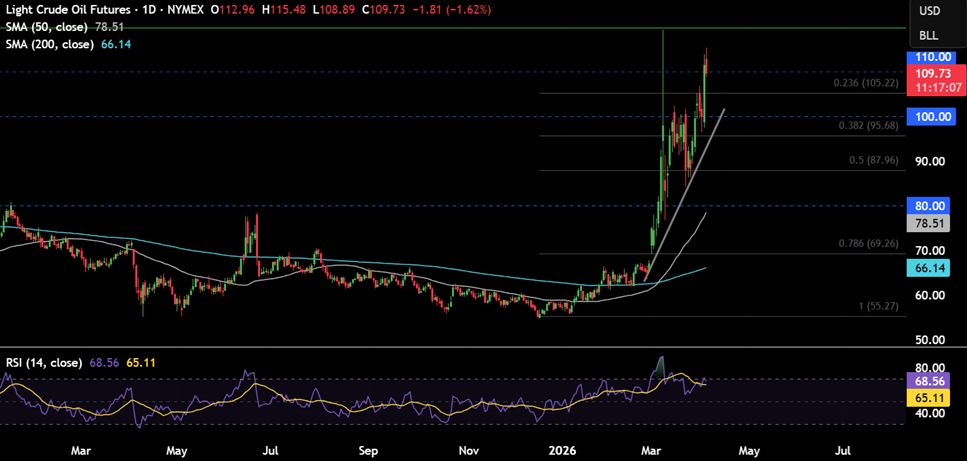
Interestingly, last week, despite oil prices jumping 11% on Thursday after Trump’s address, the 10-year treasury yield fell 2.86%, after 4 weeks of rising yields.
Bitcoin rose across the week, and US equity markets also posted gains over the holiday-shortened week, with the Nasdaq leading and recording its best weekly performance since November. The S&P 500 and Dow Jones rose 3.3% and 3.0%, respectively.
Headline-driven market remains fragile
Market direction remains highly dependent on geopolitical headlines. Over the weekend, Trump again escalated his rhetoric, warning Iran to reopen the Strait or face severe consequences. However, allies including Pakistan, Egypt, and Turkey are pushing for a last-minute ceasefire deal, boosting sentiment on Monday.
The core issue remains the closure of the Strait of Hormuz -the longer it stays closed, the higher oil prices remain, the stronger inflation pressures become, the higher yields rise, and the longer interest rates stay elevated.
This creates a structurally challenging backdrop for Bitcoin. While any resolution could pull oil prices and yields lower, boosting risk assets and BTC.
US data keeps inflation in focus
Recent US labour market data showed resilience, with nonfarm payrolls rising by 178,000 in March after a 133,000 decline in February. This supports the view that the Federal Reserve can remain focused on inflation, rather than pivoting quickly to support growth.
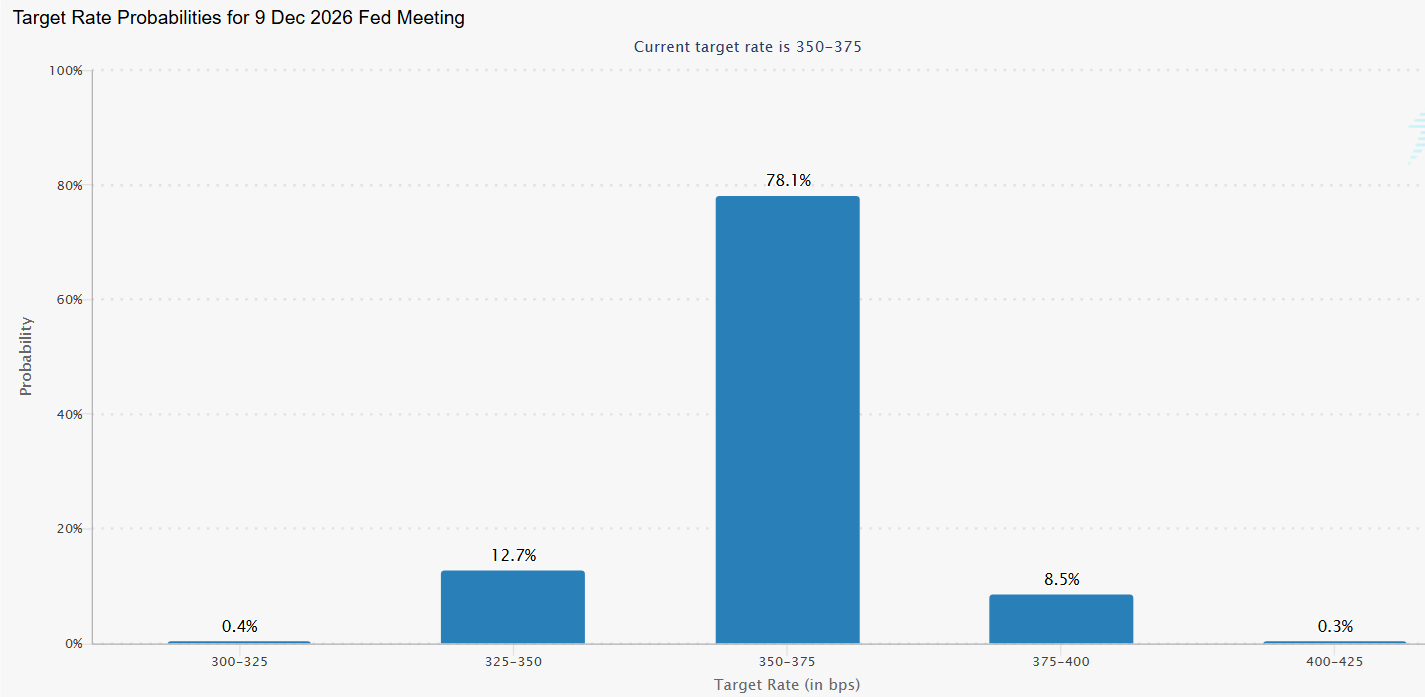
Looking ahead, attention will turn to US inflation data this week. These releases will be critical in shaping expectations for the Fed and, by extension, risk assets including crypto. The market expects the Fed to leave rates unchanged this year.
Institutional flows: stabilising but not strong
Institutional demand for Bitcoin remains muted but stabilising. According to ETF flow data, last week saw a mixed pattern with three days of inflows and two days of outflows. Across the week, spot Bitcoin ETFs recorded net inflows of $22.3 million, a modest improvement after $296.1 million of outflows the previous week.
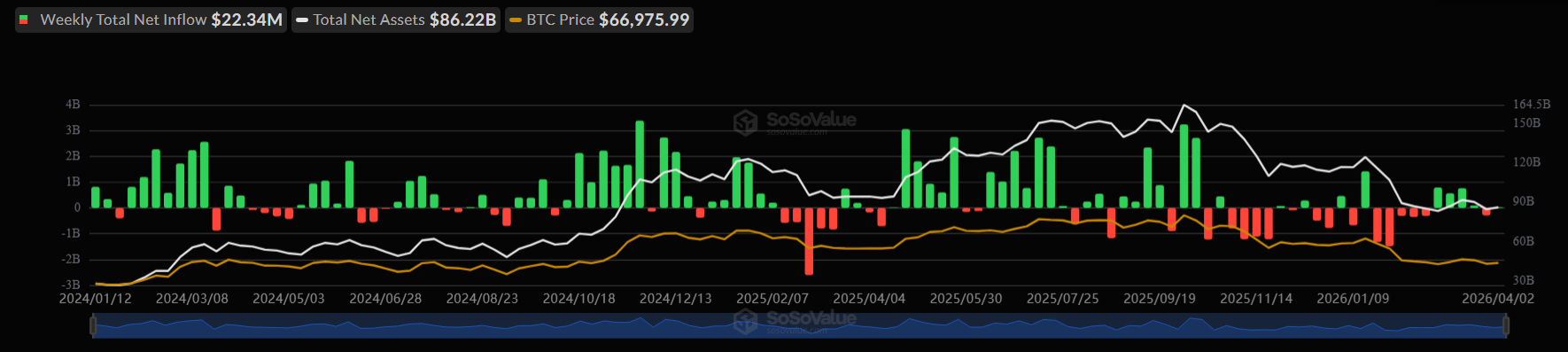
More broadly, Bitcoin saw $1.3 billion in net inflows across March, marking the first month of inflows after four consecutive months of outflows. That suggests some stabilisation — but not yet a strong conviction rebound.
Seasonality vs. reality
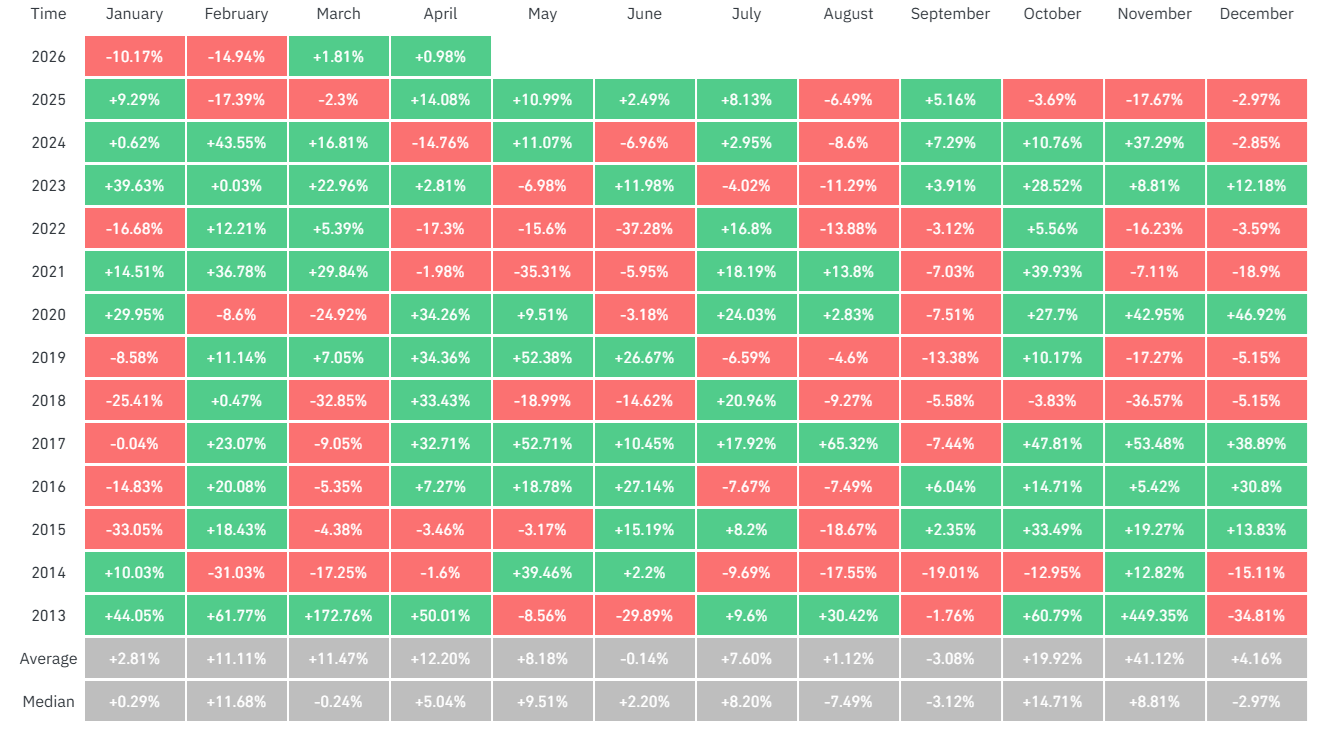
Bitcoin posted a modest gain in March, breaking a two-month losing streak, but the broader trend since late 2025 has been one of consolidation and correction. Historically, April has been a strong month for Bitcoin, with average gains of around 12%. However, for that seasonal strength to materialise, several conditions would likely need to align:
- renewed institutional inflows
- supportive regulatory developments
- and, crucially, de-escalation in the Middle East
On-chain signals: stress building
On-chain data from Glassnode points to rising stress among investors. Wallets holding between 1,000 and 10,000 BTC are realising daily losses of over $200 million (7-day moving average).
At the same time, long-term holders (LTHs) — those holding coins for over six months — are increasingly distributing holdings at a loss, indicating mounting pressure.
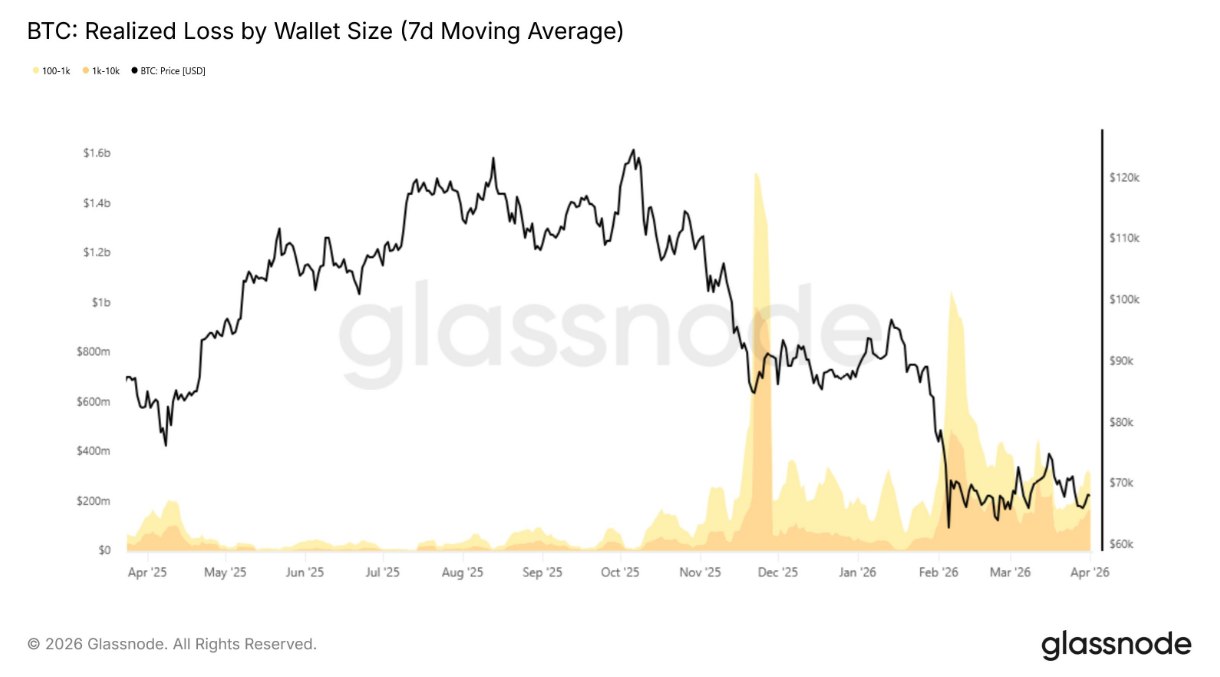
The steady rise in realised losses since November 2025 suggests weakening conviction, increased supply hitting the market, and a lack of strong demand to absorb it. This type of behaviour can resemble late-stage capitulation, which sometimes precedes a bottom — but it does not guarantee one.
For a more constructive outlook, realised losses would need to decline materially, signalling that selling pressure is easing.
Reduced accumulation among large holders
Data from Alphapractical shows that only 4 addresses hold over 100k BTC. Typically, market bottoms have been followed by robust rallies and new price highs, and an increase in the number of wallets holding over 100k BTC has occurred at this time. 2015, 2019, 2022 and 2024 have seen this trend.
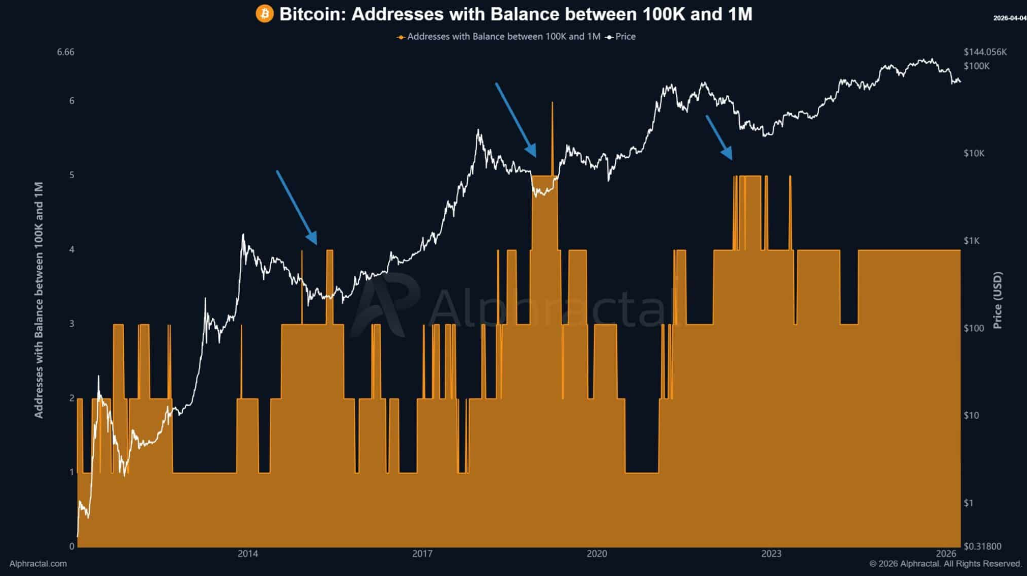
The current stagnation in this metric points to reduced accumulation among large holders. This cohort is not aggressively increasing exposure, weakening demand strength and which could mean BTC struggles to push significantly higher.
Active address and exchange withdrawals
BTC active addresses have also declined sharply. This decline reflects reduced network participation and lower transaction activity, both of which point to softer demand. With fewer transactions, this suggests a loss of a key source of organic support for price growth.
Exchange withdrawal transactions have fallen to one of the lowest levels in years, with just 908 addresses recorded.
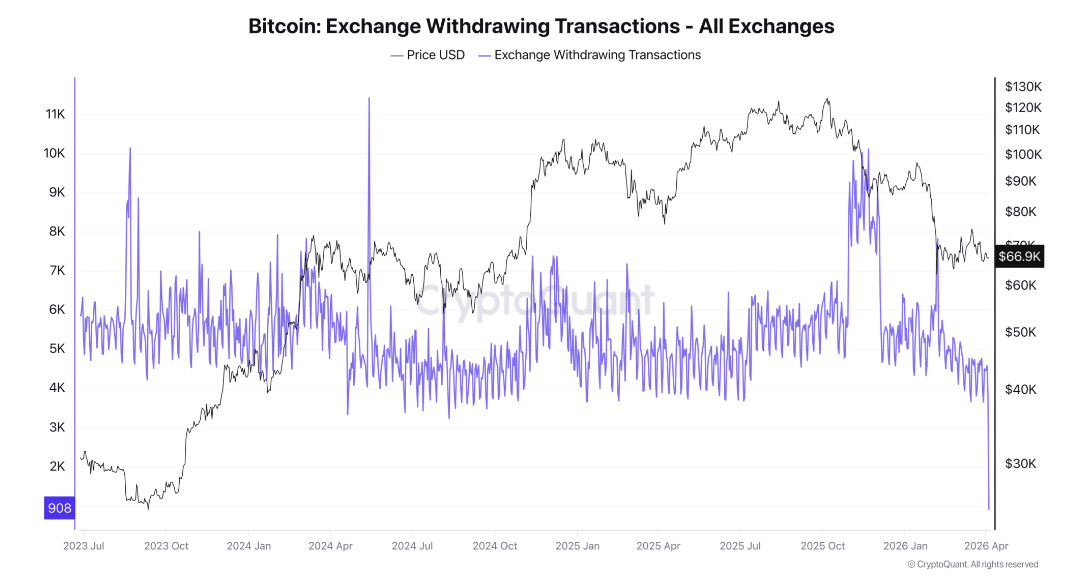
This suggests that more Bitcoin is being left on exchanges, increasing available supply and making it easier for sellers to sell at short notice. This introduces a degree of fragility into the market and raises questions about BTC’s ability to push significantly higher.
Sentiment data also reflects growing pessimism
According to social metrics, Bitcoin is seeing its highest bearish-to-bullish comment ratio since late February, with just 0.81 bullish comments per bearish comment.
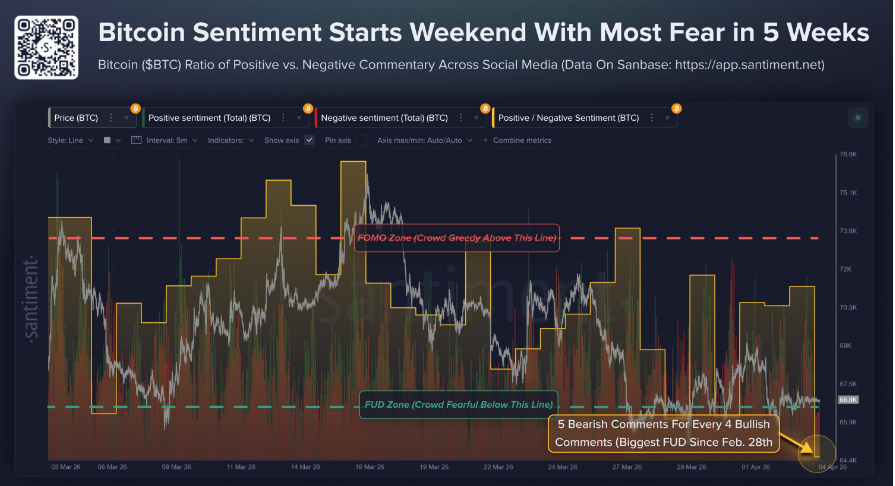
Historically, such elevated fear levels have often preceded price rebounds, as extreme negativity can signal that much of the selling has already occurred. However, this gives no clues over when the rebound could happen.
Conclusion
Bitcoin may be stabilising, but the rebound still looks more tactical than structural. Until macro pressure eases and on-chain demand improves, upside is likely to remain fragile.
Trading involves risk.
Author



 Risk Disclaimer
The content provided here is for informational purposes only. It is not intended as personal investment advice and does not constitute a solicitation or invitation to engage in any financial transactions, investments, or related activities. Past performance is not a reliable indicator of future results.
The financial products offered by the Company are complex and come with a high risk of losing money rapidly due to leverage. These products may not be suitable for all investors. Before engaging, you should consider whether you understand how these leveraged products work and whether you can afford the high risk of losing your money.
The Company does not accept clients from the Restricted Jurisdictions as indicated in our website/ T&C. Some services or products may not be available in your jurisdiction.
The applicable legal entity and its respective products and services depend on the client’s country of residence and the entity with which the client has established a contractual relationship during registration.